
- 주제별 국가전략 목록으로 이동
- 주제별 국가전략
- 전체
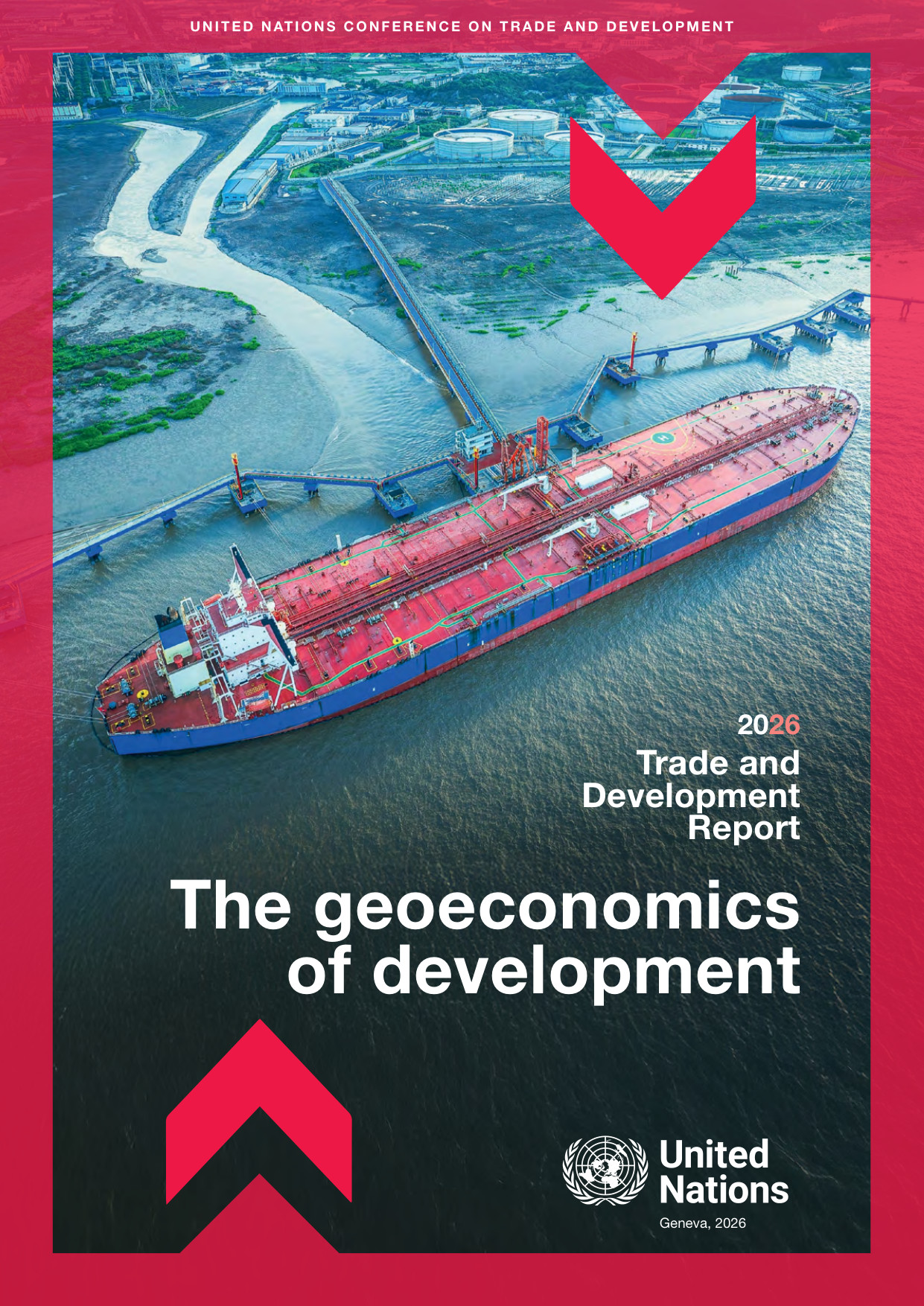
Trade and Development Report 2026
(지경학이 다시 쓰는 개발의 공식: 분절되는 세계 무역과 개도국의 선택)목차
Table of contents
Foreword x
Abbreviations xii
Explanatory notes xiii
Chapter I
Resilience and its limits 1
Policy takeaways 3
A. Artificial intelligence, the energy shock and the limits of resilience 4
B. Global economic outlook: Growth in a bifurcated world 6
1. Waning private consumption amid the energy shock 12
a) The energy shock: Transmission and absorption 14
2. Artificial intelligence boom, bubble and concentration 21
3. Fiscal reprioritization 27
a) New fiscal priorities 28
b) Shrinking development assistance 32
C. International markets 37
1. Trade: Strong yet deeply unbalanced 37
a) Trade in goods: Price increases conceal weaker volume 38
b) Trade in services: Resilient but moderating 49
2. Capital flows: High volatility amid tightening global financial conditions 50
References 56
Chapter II
Selective fragmentation: The new geography of trade 59
Policy takeaways 61
A. Introduction 62
B. Trade policy fragmentation: Causes and dynamics 63
1. Political economy and geoeconomic changes 66
a) Political dynamics 66
b) The erosion of the political consensus supporting globalization 66
c) Geoeconomic competition and strategic sectors 66
2. Domestic incentives for industrial policy intervention 66
3. Global value chains: Rebalancing efficiency and risk 67
4. Use of trade policy for non-trade objectives 67
5. Weakening multilateralism and reduced constraints on intervention 68
C. Trade policy instruments behind fragmentation 68
1. Market access and compliance instruments 72
a) Import restrictions: Tariffs and trade remedies 72
b) Regulatory requirements 74
c) Rules of origin and preferential access requirements 74
2. Government support 75
a) Subsidies and industrial support 75
b) Local content requirements and domestic preference rules 75
3. Security, technology and strategic control instruments 76
4. Institutional and regulatory fragmentation beyond WTO 76
5. Socioenvironmental conditionality 77
D. Changing trade patterns and geoeconomic shifts 79
1. Trade resilience amid volatility and unequal outcomes 79
2. Trade patterns, geographic distance and geoeconomic compatibility 80
3. Technological content of trade and strategic products 84
4. Regional trade agreements 86
E. Policy implications: Managing fragmentation while
preserving development opportunities 88
References 93
Chapter III
Development in the age of geoeconomics 95
Policy takeaways 97
A. Introduction 98
Development frontiers: An analogy 104
B. Economic policy, security and strategic sectors 104
1. The rise of strategic economic sectors 106
2. Industrial policy and geoeconomics 112
Instruments of industrial policy 113
C. Integration strategies in the current geoeconomic context 120
1. Democratic Republic of the Congo: The dilemmas of a resource advantage 120
2. Mexico: Balancing cross-border manufacturing networks 124
3. Malaysia: A structural ceiling on advanced industrialization? 128
D. Sectoral multi-alignment, regionalism and rising
economies from the global South 131
1. Turkiye: Integration and sectoral multi-alignment 131
2. Rising economies in the global South: anchoring regionalism amid geoeconomics 135
E. Conclusion and policy lessons 140
References 141
Annex 1 145
Annex 2 146
Annex 3 147
해시태그
관련자료



AI 요약·번역·분석 서비스
AI를 활용한 보고서 요약·번역과 실시간 질의응답 서비스입니다.
Trade and Development Report 2026
(지경학이 다시 쓰는 개발의 공식: 분절되는 세계 무역과 개도국의 선택)
국가전략포털에서 실시간 AI 질의응답 서비스를 시작합니다. 4가지 유형의 요약과 번역을 이용해보시고, 보고서에 대해 추가로 알고 싶은 내용이 있으면 채팅창을 통해 자유롭게 AI에게 물어볼 수 있습니다.
※ 제공하는 정보는 참고용이며, 정확한 사실 확인이 필요할 수 있습니다. 민감한 개인정보는 입력하지 마십시오.