
- 주제별 국가전략 목록으로 이동
- 주제별 국가전략
- 전체
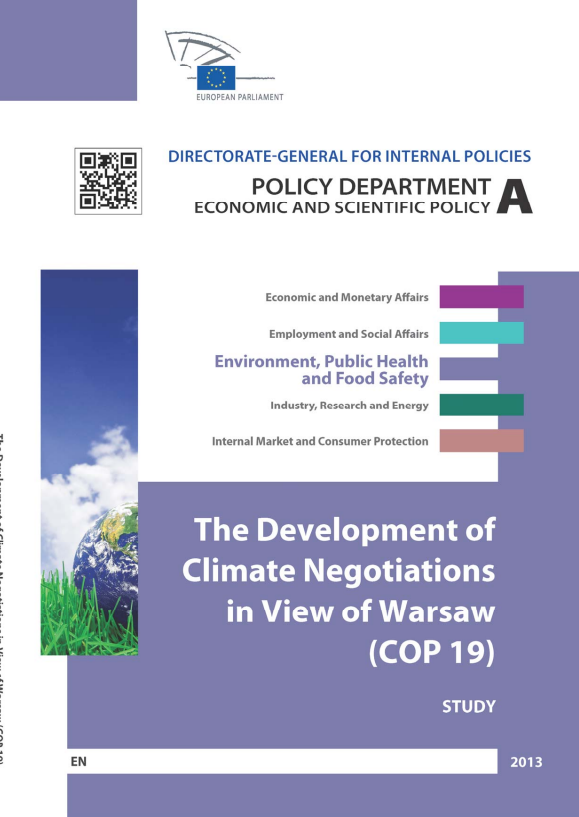
The development of climate negotiations in view of Warsaw (COP 19)
(바르샤바를 고려한 기후 협상의 발전 (COP 19))
European Parliament (EU)
2013-01-01
목차
LIST OF ABBREVIATIONS 7
LIST OF TABLES 11
LIST OF FIGURES 11
EXECUTIVE SUMMARY 12
1. GENERAL ISSUES IN CLIMATE NEGOTIATIONS BEFORE WARSAW 13
1.1. Introduction 13
1.2. Main outcomes of COP 18 in Doha 13
1.3. Implementation of the Durban Platform for Enhanced Action 15
1.3.1. Agreement achieved in Doha 15
1.3.2. Negotiation process in 2013 15
1.3.3. Position of Parties 19
1.4. Amendment of the Kyoto Protocol 21
1.4.1. Agreement achieved in Doha 21
1.4.2. Negotiation process in 2013 22
1.5. The impact of other relevant international developments on the negotiation process 23
2. INDIVIDUAL TOPICS IN CLIMATE NEGOTIATIONS 25
2.1. Mitigation of greenhouse gas emissions 25
2.1.1. Agreement achieved in Doha 25
2.1.2. Necessary emission reductions 26
2.1.3. Bridging the ambition gap 29
2.1.4. Mitigation commitments of developed countries 29
2.1.5. Pledges for mitigation action from developing countries 35
2.1.6. Negotiation process in 2013 40
2.1.7. Position of Parties 41
2.2. Monitoring, reporting and verification (MRV) and accounting arrangements for developed countries 43
2.2.1. Agreement achieved in Doha 43
2.2.2. Negotiation process in 2013 43
2.2.3. Position of Parties 45
2.3. Monitoring, reporting and verification (MRV) for developing countries 46
2.3.1. Agreement achieved in Doha 46
2.3.2. Negotiation process in 2013 46
2.3.3. Position of Parties 47
2.4. Financial support 48
2.4.1. Agreement achieved in Doha 48
2.4.2. Negotiation process in 2013 50
2.4.3. Position of Parties 55
2.5. Reducing emissions from deforestation and degradation (REDD+) 57
2.5.1. Background: key issues in negotiations 57
2.5.2. Agreement achieved in Doha 57
2.5.3. Negotiation process in 2013 58
2.5.4. REDD+ partnership in 2013 59
2.5.5. Position of Parties and stakeholders 60
2.6. Accounting for GHG emission changes from land use, land use change and forestry (LULUCF) 62
2.6.1. Agreement achieved in Doha 62
2.6.2. Negotiation process in 2013 62
2.7. Flexible mechanisms 63
2.7.1. Agreement achieved in Doha 64
2.7.2. Negotiation process in 2013 65
2.7.3. Position of Parties 66
2.8. International aviation and maritime emissions 67
2.8.1. Agreement achieved in Doha 67
2.8.2. Negotiation process in 2013 67
2.8.3. Position of Parties 68
2.9. Technology and technology transfer 68
2.9.1. Agreement achieved in Doha 68
2.9.2. Negotiation process in 2013 69
2.9.3. Position of Parties 70
2.10.Adaptation 70
2.10.1. Agreement achieved in Doha 71
2.10.2. Negotiation process in 2013 71
2.10.3. Position of Parties 72
2.11.Loss and damage 72
2.11.1. Agreement achieved in Doha 73
2.11.2. Negotiation process in 2013 73
2.11.3. Position of Parties 73
2.12.Capacity building 74
2.12.1. Agreement achieved in Doha 74
2.12.2. Negotiation process in 2013 74
2.12.3. Position of Parties 74
3. COUNTRY POSITIONS 76
3.1. China 76
3.1.1. Facts 76
3.1.2. Positions 77
3.2. India 78
3.2.1. Facts 78
3.2.2. Positions 79
3.3. Brazil 79
3.3.1. Facts 79
3.3.2. Positions 80
3.4. Mexico 82
3.4.1. Facts 82
3.4.2. Positions 82
3.5. South Africa 83
3.5.1. Facts 83
3.5.2. Positions 84
3.6. USA 85
3.6.1. Facts 85
3.6.2. Positions 87
3.7. The Russian Federation 90
3.7.1. Facts 90
3.7.2. Positions 91
3.8. Japan 92
3.8.1. Facts 92
3.8.2. Positions 93
3.9. Australia 93
3.9.1. Facts 93
3.9.2. Positions 95
3.10.Peru 95
3.10.1. Facts 95
3.10.2. Positions 97
4. POSITION OF NEGOTIATION GROUPS 98
4.1. G-77 & China 98
4.2. Like-minded developing countries 98
4.3. AOSIS 99
4.4. Umbrella Group 100
4.5. ALBA countries 100
4.6. Cartagena Dialogue 101
4.7. AILAC 102
5. POSITIONS OF STAKEHOLDER GROUPS 103
5.1. Environmental NGOs 103
5.1.1. Climate Action Network (CAN) 103
5.1.2. Climate Justice Now! / Third World Network 104
5.2. ICAO 104
5.3. IMO 106
5.4. GEF 107
5.5. Intergovernmental Panel on Climate Change (IPCC) 109
6. GLOSSARY 110
6.1. Understanding the agenda and the daily programme 110
6.2. Negotiation formats 111
6.3. Types of documents 112
6.4. Negotiating groups 112
6.5. Other key terms 113
6.6. Institutions under the UNFCCC 114
6.7. Shift of issues under AWG-LCA to other negotiating bodies 115
7. REFERENCES 118
LIST OF TABLES 11
LIST OF FIGURES 11
EXECUTIVE SUMMARY 12
1. GENERAL ISSUES IN CLIMATE NEGOTIATIONS BEFORE WARSAW 13
1.1. Introduction 13
1.2. Main outcomes of COP 18 in Doha 13
1.3. Implementation of the Durban Platform for Enhanced Action 15
1.3.1. Agreement achieved in Doha 15
1.3.2. Negotiation process in 2013 15
1.3.3. Position of Parties 19
1.4. Amendment of the Kyoto Protocol 21
1.4.1. Agreement achieved in Doha 21
1.4.2. Negotiation process in 2013 22
1.5. The impact of other relevant international developments on the negotiation process 23
2. INDIVIDUAL TOPICS IN CLIMATE NEGOTIATIONS 25
2.1. Mitigation of greenhouse gas emissions 25
2.1.1. Agreement achieved in Doha 25
2.1.2. Necessary emission reductions 26
2.1.3. Bridging the ambition gap 29
2.1.4. Mitigation commitments of developed countries 29
2.1.5. Pledges for mitigation action from developing countries 35
2.1.6. Negotiation process in 2013 40
2.1.7. Position of Parties 41
2.2. Monitoring, reporting and verification (MRV) and accounting arrangements for developed countries 43
2.2.1. Agreement achieved in Doha 43
2.2.2. Negotiation process in 2013 43
2.2.3. Position of Parties 45
2.3. Monitoring, reporting and verification (MRV) for developing countries 46
2.3.1. Agreement achieved in Doha 46
2.3.2. Negotiation process in 2013 46
2.3.3. Position of Parties 47
2.4. Financial support 48
2.4.1. Agreement achieved in Doha 48
2.4.2. Negotiation process in 2013 50
2.4.3. Position of Parties 55
2.5. Reducing emissions from deforestation and degradation (REDD+) 57
2.5.1. Background: key issues in negotiations 57
2.5.2. Agreement achieved in Doha 57
2.5.3. Negotiation process in 2013 58
2.5.4. REDD+ partnership in 2013 59
2.5.5. Position of Parties and stakeholders 60
2.6. Accounting for GHG emission changes from land use, land use change and forestry (LULUCF) 62
2.6.1. Agreement achieved in Doha 62
2.6.2. Negotiation process in 2013 62
2.7. Flexible mechanisms 63
2.7.1. Agreement achieved in Doha 64
2.7.2. Negotiation process in 2013 65
2.7.3. Position of Parties 66
2.8. International aviation and maritime emissions 67
2.8.1. Agreement achieved in Doha 67
2.8.2. Negotiation process in 2013 67
2.8.3. Position of Parties 68
2.9. Technology and technology transfer 68
2.9.1. Agreement achieved in Doha 68
2.9.2. Negotiation process in 2013 69
2.9.3. Position of Parties 70
2.10.Adaptation 70
2.10.1. Agreement achieved in Doha 71
2.10.2. Negotiation process in 2013 71
2.10.3. Position of Parties 72
2.11.Loss and damage 72
2.11.1. Agreement achieved in Doha 73
2.11.2. Negotiation process in 2013 73
2.11.3. Position of Parties 73
2.12.Capacity building 74
2.12.1. Agreement achieved in Doha 74
2.12.2. Negotiation process in 2013 74
2.12.3. Position of Parties 74
3. COUNTRY POSITIONS 76
3.1. China 76
3.1.1. Facts 76
3.1.2. Positions 77
3.2. India 78
3.2.1. Facts 78
3.2.2. Positions 79
3.3. Brazil 79
3.3.1. Facts 79
3.3.2. Positions 80
3.4. Mexico 82
3.4.1. Facts 82
3.4.2. Positions 82
3.5. South Africa 83
3.5.1. Facts 83
3.5.2. Positions 84
3.6. USA 85
3.6.1. Facts 85
3.6.2. Positions 87
3.7. The Russian Federation 90
3.7.1. Facts 90
3.7.2. Positions 91
3.8. Japan 92
3.8.1. Facts 92
3.8.2. Positions 93
3.9. Australia 93
3.9.1. Facts 93
3.9.2. Positions 95
3.10.Peru 95
3.10.1. Facts 95
3.10.2. Positions 97
4. POSITION OF NEGOTIATION GROUPS 98
4.1. G-77 & China 98
4.2. Like-minded developing countries 98
4.3. AOSIS 99
4.4. Umbrella Group 100
4.5. ALBA countries 100
4.6. Cartagena Dialogue 101
4.7. AILAC 102
5. POSITIONS OF STAKEHOLDER GROUPS 103
5.1. Environmental NGOs 103
5.1.1. Climate Action Network (CAN) 103
5.1.2. Climate Justice Now! / Third World Network 104
5.2. ICAO 104
5.3. IMO 106
5.4. GEF 107
5.5. Intergovernmental Panel on Climate Change (IPCC) 109
6. GLOSSARY 110
6.1. Understanding the agenda and the daily programme 110
6.2. Negotiation formats 111
6.3. Types of documents 112
6.4. Negotiating groups 112
6.5. Other key terms 113
6.6. Institutions under the UNFCCC 114
6.7. Shift of issues under AWG-LCA to other negotiating bodies 115
7. REFERENCES 118
해시태그
관련자료


AI 요약·번역·분석 서비스
AI를 활용한 보고서 요약·번역과 실시간 질의응답 서비스입니다.
The development of climate negotiations in view of Warsaw (COP 19)
(바르샤바를 고려한 기후 협상의 발전 (COP 19))
국가전략포털에서 실시간 AI 질의응답 서비스를 시작합니다. 4가지 유형의 요약과 번역을 이용해보시고, 보고서에 대해 추가로 알고 싶은 내용이 있으면 채팅창을 통해 자유롭게 AI에게 물어볼 수 있습니다.
※ 제공하는 정보는 참고용이며, 정확한 사실 확인이 필요할 수 있습니다. 민감한 개인정보는 입력하지 마십시오.