
- 주제별 국가전략 목록으로 이동
- 주제별 국가전략
- 전체
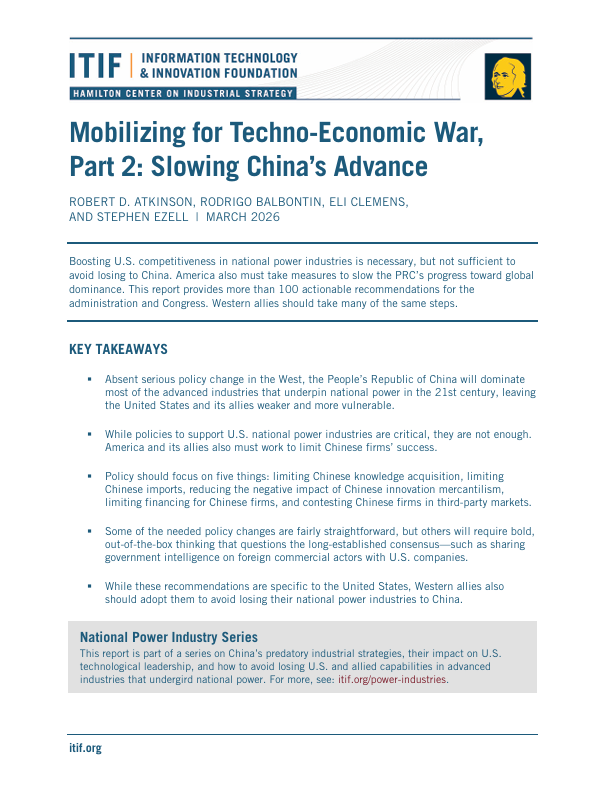
Mobilizing for Techno-Economic War, Part 2: Slowing China’s Advance
(기술-경제 전쟁을 위한 동원, 제2부: 중국의 진전을 늦추기)목차
Key Takeaways 1
Introduction 4
Principles For Limiting the PRC’s National Power Industry Advance 5
The Prisoner’s Dilemma 6
Limits of Export Controls 8
Limiting Chinese Knowledge Acquisition 11
University and Government Research Policies 11
Limit Chinese Nationals Receiving Postdocs at Universities and FFRDCs 12
Ban Chinese Funding of U.S. Research Universities 12
Require Disclosure of U.S. Faculty Research With Chinese Researchers Related to National Power Industries 12
Institute Better Screening of Chinese STEM Students 14
Restrict the U.S.-China Science and Technology Agreement 15
Business Knowledge Acquisition 15
Restore the White House IP Enforcement Coordinator 16
Limit Chinese “False Flagging” 16
Limit Assets Going to Chinese Firms in U.S. Bankruptcy Proceedings 18
Pass a New FIRRMA That Is Tougher on China 18
Limit Chinese Companies Doing Business in the United States 19
Expand the FBI’s Commercial Counterintelligence Budget and Capabilities 19
Expand the DHS Cybersecurity and Infrastructure Security Agency and Homeland Security Investigations Group 20
Limit Chinese Firms From Using the Courts to Gain Access to U.S. IP 20
Increase Criminal Penalties for IP Theft 20
Assist Nations in Modernizing Their Export Control Regimes 21
Limiting Chinese Imports 22
Stop Imports From Chinese Companies on the Entity List 22
Reform Section 337 of the Tariff Act 22
Rely More on BIS Bans Based on Cyberrisks 23
Strengthen Government Procurement Restrictions 24
Require Products Made by Chinese Companies to Be Labeled As Such 26
Build an “Inspection Wall” Against Counterfeit and Pirated Chinese Goods 28
Expand Section 5949 Purchases From Entity List to More Products 28
Limiting Financing to Chinese Firms 29
Penalize States and Localities That Provide Incentives to Chinese Companies 29
Stop Public Pension Funds From Investing in China 29
Better Identify Chinese Interests in U.S. Research Funding to Business 30
Reducing the Negative Impact of Chinese Mercantilist Policies 32
Bring a WTO Case on Subsidies 32
Limit Chinese Funding of Third-Party Litigation 33
Use Antitrust Law to Combat China’s Anticompetitive Practices 34
Push Back Against SEP Abuse 36
Reducing Allied Production in China 37
Create a North American Integrated Market 37
Allies Should Agree on Several Non-Chinese Production Hubs 38
Establish a Reshoring Incentive Fund 41
Establish a Tax Incentive for Firms to Move Chinese Production to Labor Surplus Areas 41
Have Companies List Their Reduction of Production in China as Part of ESG Reporting 41
Establish Escalating Long-Term Tariffs on Final Goods Imports From China 42
Contesting Chinese Firms in Non-Allied Markets 45
Expand and Reform EX-IM Bank 46
Expand the International Development Finance Corporation 47
Foster a National Export Promotion System 48
Promote National Power Exports to the Global South 48
Make It Easier to Export Weapons to All Nations in the Foreign Military Sales Program 49
Reform the Foreign Corrupt Practices Act to Allow Bribes When Competing With China 52
Allow U.S. Intelligence Services to Give Insights Into Chinese Company Bids 53
Expand Training and Other Outreach to Government Officials in Contested Nations 56
Conclusion 57
Appendix: Summary of Recommendations 58
Endnotes 67
해시태그
관련자료



AI 요약·번역·분석 서비스
AI를 활용한 보고서 요약·번역과 실시간 질의응답 서비스입니다.
Mobilizing for Techno-Economic War, Part 2: Slowing China’s Advance
(기술-경제 전쟁을 위한 동원, 제2부: 중국의 진전을 늦추기)
국가전략포털에서 실시간 AI 질의응답 서비스를 시작합니다. 4가지 유형의 요약과 번역을 이용해보시고, 보고서에 대해 추가로 알고 싶은 내용이 있으면 채팅창을 통해 자유롭게 AI에게 물어볼 수 있습니다.
※ 제공하는 정보는 참고용이며, 정확한 사실 확인이 필요할 수 있습니다. 민감한 개인정보는 입력하지 마십시오.