
- 주제별 국가전략 목록으로 이동
- 주제별 국가전략
- 전체
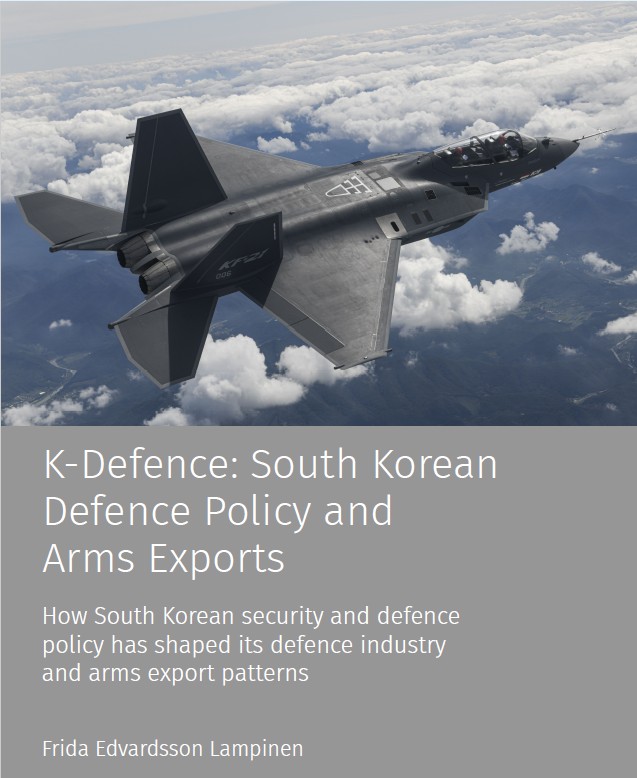
K-Defence: South Korean Defence Policy and Arms Exports
(한국의 국방 정책 및 무기 수출 실태 분석 보고서)목차
Table of contents
1 Introduction 13
1 1 Aim and research question 13
1 2 Methods and materials 14
1 3 Definitions and delimitations 15
1 4 Reading guide 16
2 The pillars of South Korean security policy 17
2 1 A rabbit, tiger, or shrimp among whales? 17
2 2 Legacies of the Korean War in domestic politics 19
2 2 1 The declaration of martial law in December 2024 22
2 3 The North Korean threat 24
2 3 1 North Korea’s two-state policy 27
2 4 The US–ROK defence alliance 28
2 4 1 The alliance is born 28
2 4 2 The Nixon doctrine and the take-off of the defence industry 29
2 4 3 A more symmetrical relationship 29
2 4 4 Growing distrust and the Korean nuclear weapons debate 30
2 4 5 The alliance’s current status and hot issues under Trump 2 0 31
2 5 New challenges 32
2 5 1 Regional instability and China as a security threat 33
2 5 2 Economic security 34
2 5 3 At a foreign-policy crossroads 35
2 6 Summary 38
3 Defence economics, capabilities, and acquisitions 39
3 1 Military expenditure and economic outlook 39
3 2 The ROK Armed Forces 41
3 2 1 Command structure 42
3 2 2 The three armed services 42
3 2 3 Personnel supply 44
3 2 4 Host-nation support and international missions 44
3 3 Capability development and materiel supply 44
3 3 1 State actors in the procurement process 45
3 3 2 Materiel supply strategy 47
3 3 3 Distribution, trends, and challenges in materiel supply 48
3 3 4 Prioritised areas of force improvement 50
3 4 Challenges to defence sector development 52
3 4 1 Financial challenges 52
3 4 2 Social challenges 52
3 4 3 Technological challenges 53
3 4 4 Security policy challenges 53
3 5 Summary 54
4 Defence industry 55
4 1 An overview of the defence industry 55
4 2 Central commercial actors 57
4 2 1 The ground domain 57
4 2 2 The maritime domain 59
4 2 3 The aerospace domain 59
4 2 4 Sensors and C4I 60
4 3 Political governance and legal frameworks 60
4 3 1 The chaebol system 60
4 3 2 State ownership 62
4 3 3 Political signalling 63
44 4 Summary 6
5 Arms exports 67
5 1 Export volumes and noteworthy sales 68
5 1 1 Materiel categories 69
5 1 2 Delivery times 70
5 1 3 Regional distribution 72
5 2 Legal frameworks related to arms exports 73
5 3 Success factors 74
5 3 1 Growth expectations 75
5 4 Export promotion strategies 77
5 4 1 Tailored offers 78
5 4 2 Cooperation in research and development 79
5 4 3 Innovation 79
5 4 4 Joint marketing 79
5 5 Case study: the Poland deal 80
5 5 1 Success factors 81
5 5 2 Setbacks 82
5 5 3 Opportunities and limitations of the next Big Deal 83
5 6 Summary 83
5 7 Final reflections on South Korea’s competitiveness in arms exports 84
5 7 1 Performance and functionality 84
5 7 2 Order volumes, delivery times, and pricing 85
5 7 3 Market access 86
5 7 4 Business reputation 87
5 7 5 Future prospects 87
6 Conclusion 89
6 1 Implications for European security 90
References 93
Appendices 107
Appendix 1: Domestically produced materiel in the ROKAF’s equipment inventory 107
Appendix 2: prioritised technology areas 108
Appendix 3: licensed defence contractors 109
해시태그
관련자료



AI 요약·번역·분석 서비스
AI를 활용한 보고서 요약·번역과 실시간 질의응답 서비스입니다.
K-Defence: South Korean Defence Policy and Arms Exports
(한국의 국방 정책 및 무기 수출 실태 분석 보고서)
국가전략포털에서 실시간 AI 질의응답 서비스를 시작합니다. 4가지 유형의 요약과 번역을 이용해보시고, 보고서에 대해 추가로 알고 싶은 내용이 있으면 채팅창을 통해 자유롭게 AI에게 물어볼 수 있습니다.
※ 제공하는 정보는 참고용이며, 정확한 사실 확인이 필요할 수 있습니다. 민감한 개인정보는 입력하지 마십시오.