
- 주제별 국가전략 목록으로 이동
- 주제별 국가전략
- 전체
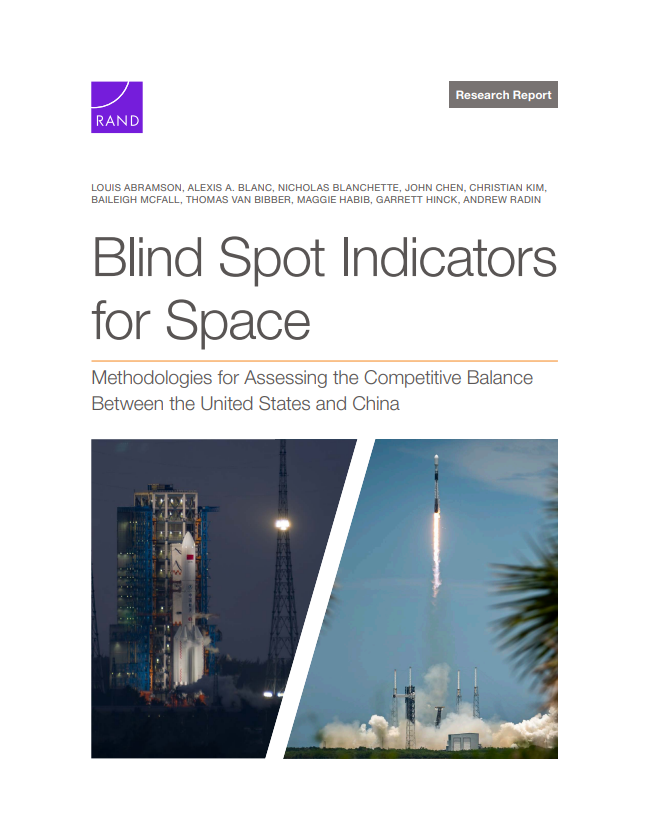
Blind Spot Indicators for Space: Methodologies for Assessing the Competitive Balance Between the United States and China
(우주 공간 사각지대 표시기: 미국과 중국 간 경쟁 균형 평가 방법론)목차
About This Report iii
Summary v
Figures and Tables ix
Chapter 1. Motivation and Setting 1
The Issue 1
Research Approach 1
Space Competition: Definition and Sources 2
Caveats 3
Organization of This Report 5
Chapter 2. Toward a Quantitative Space Competition Forecast: Sectoral and National Indicators of Space Competition 6
National Potential for Space Competitiveness Schema 6
Conclusion 23
Chapter 3. A Quantitative Methodology and Forecast of Future Spacelift 25
Caveats on Forecasting 25
Methodology 26
The Ensemble Short-Term Launch Forecast 30
Long-Term Projections Based on a Modal 2030 Scenario 34
Beyond Launch Cadences: Payload and Booster Characteristics 37
Conclusion 45
Chapter 4. A Machine-Learning–Based Methodology and Linguistic Analysis to Forecast Space Competition 46
Blind Spots in Understanding the PLA's Pursuit of Space Capabilities 46
Parsing Academic Metadata for Greater Insight into PLA Views 49
Conclusion 59
Chapter 5. Conclusion and Recommendations 61
Limitations and Future Directions 62
Recommendations for U.S. Decisionmakers 63
Abbreviations 65
References 66
해시태그
관련자료



AI 요약·번역·분석 서비스
AI를 활용한 보고서 요약·번역과 실시간 질의응답 서비스입니다.
Blind Spot Indicators for Space: Methodologies for Assessing the Competitive Balance Between the United States and China
(우주 공간 사각지대 표시기: 미국과 중국 간 경쟁 균형 평가 방법론)
국가전략포털에서 실시간 AI 질의응답 서비스를 시작합니다. 4가지 유형의 요약과 번역을 이용해보시고, 보고서에 대해 추가로 알고 싶은 내용이 있으면 채팅창을 통해 자유롭게 AI에게 물어볼 수 있습니다.
※ 제공하는 정보는 참고용이며, 정확한 사실 확인이 필요할 수 있습니다. 민감한 개인정보는 입력하지 마십시오.