
- 주제별 국가전략 목록으로 이동
- 주제별 국가전략
- 전체
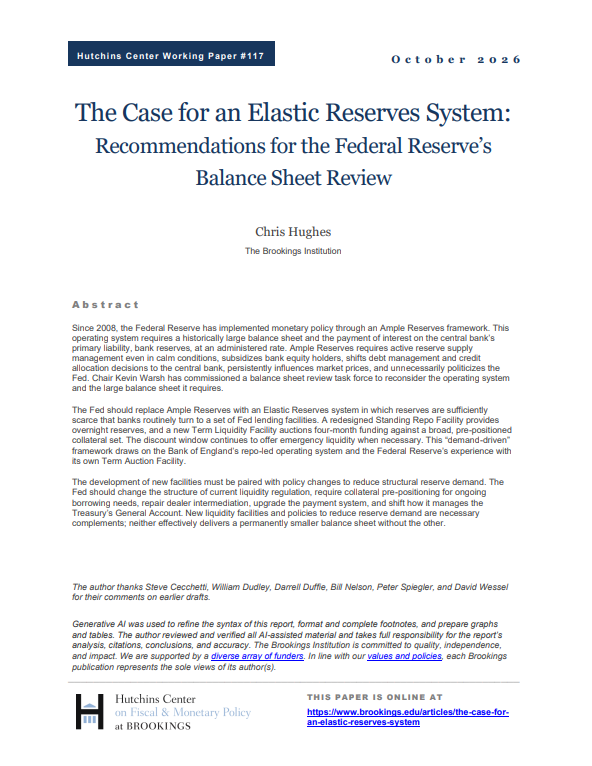
The case for an Elastic Reserves system: Recommendations for the Federal Reserve’s balance sheet review
(탄력적 준비금 제도의 필요성: 연방준비제도의 대차대조표 검토를 위한 권고안)목차
Summary of Recommendations 1
I. Introduction: The Case for Change 2
The promises and limits of Ample Reserves 2
The fiscal and distributive costs 7
The Fed’s footprint in markets and politics 9
What a successor system should do 10
II. The New Elastic Reserves System 11
What reserves should be for 11
The central principle: Supply set by demand 13
Let private wholesale markets allocate liquidity first 15
A redesigned Standing Repo Facility 15
A new Term Liquidity Facility (TLF) 17
The Term Auction Facility precedent 20
The discount window, retained as the emergency tier 22
The package, not a menu 23
Precedents: The Bank of England, the ECB, and Australia 23
III. Reducing Structural Demand for Reserves 24
First, pre-position collateral 25
Second, replace stockpiling requirements with usable liquidity 27
Third, enable primary dealers to intermediate 29
Fourth, modernize the payment system 30
Fifth, insulate reserves from the Treasury’s account 31
What the program yields 32
IV. Objections, Tradeoffs, and Safeguards 32
Why not repair Ample Reserves? 32
Will routine facilities displace private markets? 34
Collateral and credit risk 34
Haircuts and the temptation to steer credit 35
Moral hazard 35
Stigma, disclosure, and the bailout narrative 36
V. From Review to Implementation
해시태그
관련자료



AI 요약·번역·분석 서비스
AI를 활용한 보고서 요약·번역과 실시간 질의응답 서비스입니다.
The case for an Elastic Reserves system: Recommendations for the Federal Reserve’s balance sheet review
(탄력적 준비금 제도의 필요성: 연방준비제도의 대차대조표 검토를 위한 권고안)
국가전략포털에서 실시간 AI 질의응답 서비스를 시작합니다. 4가지 유형의 요약과 번역을 이용해보시고, 보고서에 대해 추가로 알고 싶은 내용이 있으면 채팅창을 통해 자유롭게 AI에게 물어볼 수 있습니다.
※ 제공하는 정보는 참고용이며, 정확한 사실 확인이 필요할 수 있습니다. 민감한 개인정보는 입력하지 마십시오.