
- 주제별 국가전략 목록으로 이동
- 주제별 국가전략
- 전체
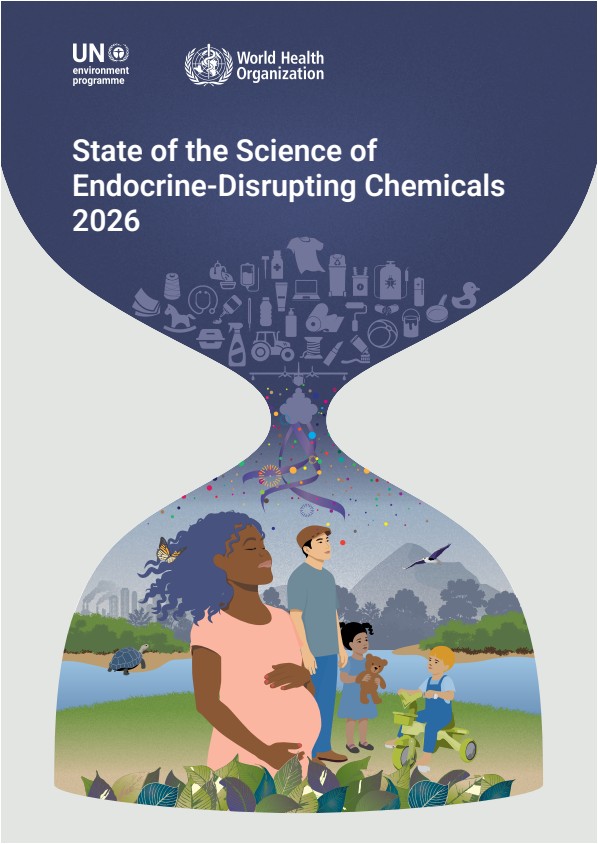
State of the Science of Endocrine-Disrupting Chemicals 2026
(2026 내분비계 교란물질의 과학적 연구 현황)목차
Acknowledgements iii
List of abbreviations and acronyms v
Foreword xii
Executive Summary xiv
1 Introduction to the State of the Science report 1
1.1 Why this report, and why now 1
1.2 Audience for this report 2
1.3 Structure of the report 2
1.4 What are endocrine-disrupting chemicals? 3
1.5 EDCs: an expanding universe of chemicals 4
1.6 Endocrine-mediated diseases and dysfunctions 6
1.7 Understanding the endocrine system 6
1.8 General principles of endocrinology and their impact on understanding of EDCs 8
1.9 One Health and the conservation of the endocrine system 12
1.10 Building the case: the strength of evidence 13
2 Evidence for endocrine disruption in humans and animals 14
2.1 Introduction 14
2.2 Literature review methodology 16
2.3 Reproductive disorders 16
2.3.1 Female reproductive health 16
2.3.2 Male reproductive health 21
2.4 Thyroid hormone system-related disorders 24
2.5 Neurobehavioural disorders 28
2.6 Other disorders of development 32
2.7 Immune-related disorders 36
2.8 Metabolic disorders 40
2.9 Cancer-related disorders 44
2.10 Cardiovascular disorders 47
2.11 Other disorders 50
3 Testing and assessment of EDCs 53
3.1 Introduction 53
3.2 Endocrine-disrupting chemicals: definition and key terms 54
3.2.1 Endocrine system 54
3.2.2 Functions of the endocrine system 55
3.2.3 Adverse effect 55
3.2.4 Intact organism 56
3.2.5 Validated test systems 56
3.3 Standardized testing to identify EDCs 56
3.3.1 Test guideline development and validation 56
3.3.2 Test guidelines provide a structured approach to testing and assessment of EDCs 58
3.3.3 Endpoints relevant to endocrine disruption 59
3.3.4 Strengths and weaknesses of estrogen, androgen, thyroid and steroidogenic endpoints currently available in standard test guidelines 61
3.3.5 New approach methodologies 63
3.4 Assessments and integration of evidence 64
3.4.1 Key characteristics approach 65
3.4.2 Adverse outcome pathway approach 66
3.4.3 Hazard identification and hazard assessment 68
3.4.4 Improving trust via use of systematic reviews and risk of bias tools 70
3.5 Key considerations for interpreting testing and assessment results 72
3.5.1 Hazard versus risk 72
3.5.2 Thresholds 72
3.5.3 Potency 73
3.5.4 Sex differences 75
3.5.5 Dose–response 75
3.5.6 Timing and critical windows 77
3.5.7 Mixtures 79
3.5.8 Beyond chemicals: interactions between EDCs and other stressors 80
3.6 Summary and key messages 81
3.7 Key implications 83
3.7.1 Scientific limitations of current testing methods 83
3.7.2 Gaps in regulatory testing programmes 84
3.7.3 Role of human and wildlife population data 84
3.7.4 Strengthening the use of academic and independent research 84
3.7.5 Mixture exposures, epidemiological evidence and priority actions 84
4 Exposure to endocrine-disrupting chemicals 85
4.1 Identification of EDCs 85
4.1.1 Initiatives to identify EDCs: summary of the 2017 overview report 86
4.1.2 OECD approaches to EDC identification 86
4.1.3 Identifying EDCs in the European Union 87
4.1.4 Identifying EDCs in the United States of America 88
4.1.5 Identifying EDCs in Japan 88
4.2 Exposure to EDCs and monitoring 89
4.2.1 EDCs exposure and biomonitoring 89
4.2.2 Environmental monitoring of EDCs 93
4.3 Exposure and monitoring: developments since 2012 93
4.3.1 Key findings from the 2012 report 93
4.3.2 Progress since 2012 and remaining challenges 94
4.4 Select EDCs in focus 96
4.4.1 Bisphenols (BPA, BPS and BPF) 96
4.4.2 Polychlorinated biphenyls 99
4.4.3 Nonylphenols 102
4.4.4 Phthalates 104
4.4.5 Triphenyl phosphate 107
4.4.6 Pesticides 109
4.4.7 4-methylbenzylidene camphor 113
4.4.8 Triclosan 114
4.5 Lessons learned from select EDCs: regrettable substitution 116
4.6 Key implications and recommendations 118
5 Socioeconomic and policy analysis for EDCs 119
5.1 Socioeconomic costs and impacts of EDCs 119
5.1.1 Introduction to socioeconomic analysis 119
5.1.2 Approaches to quantifying EDC-related externalities 121
5.1.3 Gaps and future directions 122
5.2 Overview of existing policy instruments and actions 126
5.2.1 Legally binding instruments 126
5.2.2 Soft law instruments 132
5.2.3 Voluntary efforts 134
5.2.4 Gaps and actionable recommendations 135
6 Implications for decision makers 137
6.1 Summary of the state of the science and key messages 137
6.2 Key implications for decision makers: a call to action to address key gaps and needs 146
7 References 151
Annex I. Brief history of EDC research and policy responses 204
Annex II. Chapter 2 search methodologies and general overview of retrieved literature 206
Annex III. Chemicals currently identified as EDCs by the European Union 217
해시태그
관련자료


AI 요약·번역·분석 서비스
AI를 활용한 보고서 요약·번역과 실시간 질의응답 서비스입니다.
State of the Science of Endocrine-Disrupting Chemicals 2026
(2026 내분비계 교란물질의 과학적 연구 현황)
국가전략포털에서 실시간 AI 질의응답 서비스를 시작합니다. 4가지 유형의 요약과 번역을 이용해보시고, 보고서에 대해 추가로 알고 싶은 내용이 있으면 채팅창을 통해 자유롭게 AI에게 물어볼 수 있습니다.
※ 제공하는 정보는 참고용이며, 정확한 사실 확인이 필요할 수 있습니다. 민감한 개인정보는 입력하지 마십시오.