
- 주제별 국가전략 목록으로 이동
- 주제별 국가전략
- 전체
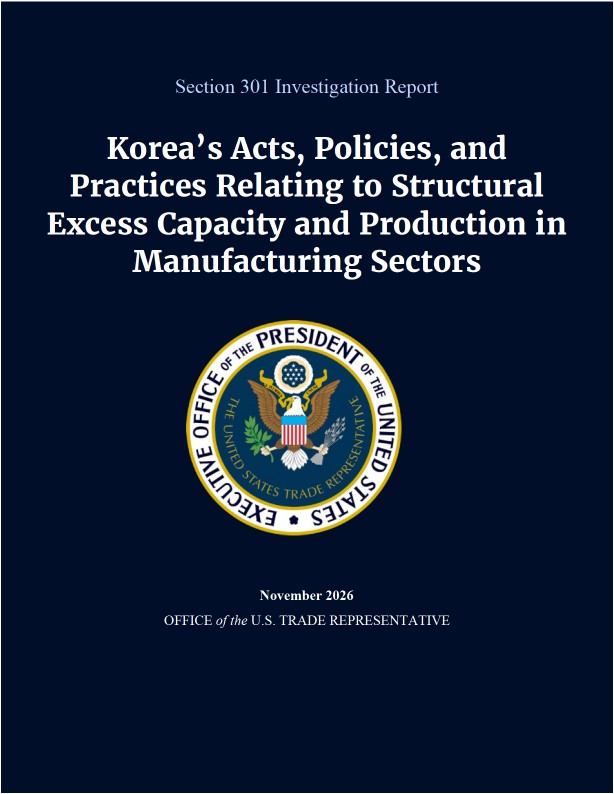
Korea's Acts, Policies, and Practices Relating to Structural Excess Capacity and Production in Manufacturing Sectors: Section 301 Investigation Report
(한국 제조업의 구조적 과잉생산능력과 생산에 관한 법률·정책·관행: 미국 무역법 제301조 조사보고서)□ 미국 무역대표부의 한국 제조업 구조적 과잉생산 조사
ㅇ 미국 무역대표부(USTR)는 11월 25일 한국 제조업의 구조적 과잉생산 문제를 다룬 조사보고서를 공개하고, 한국의 산업정책과 제조업 생산 확대가 미국 경제에 부담을 초래한다고 판단함
ㅇ USTR은 한국의 자동차·반도체·석유화학 산업을 과잉생산 관련 주요 분야로 지목하고, 한국 정부의 전략산업 육성정책과 금융 지원 등이 미국 시장의 경쟁을 왜곡한다고 주장함
ㅇ 조사 결과를 토대로 USTR은 한국산 제품에 최대 15%의 관세율을 적용하는 방안을 별도로 제시했으며, 향후 협의와 기존 약속의 이행 결과에 따라 25%까지 인상할 가능성을 열어둠
□ 한국 산업정책과 제조업 과잉생산에 대한 미국 측 판단
ㅇ USTR은 한국 정부가 산업별 육성계획과 국책은행의 우대금융 등을 통해 제조업 생산과 수출을 확대하고 있으며, 이러한 정책이 시장경쟁을 왜곡한다고 주장함
ㅇ 조사보고서에는 한국 정부의 123개 국정과제와 국가전략기술 육성 기본계획, K-반도체 전략, 미래자동차 산업 발전전략 등이 언급됐으며, 3대 메가프로젝트의 하나인 호남권 반도체 클러스터 조성계획도 문제 삼음
ㅇ USTR은 한국의 국내총생산(GDP) 대비 제조업 비중이 28.3%로 미국(9.9%)보다 높고, GDP 대비 상품 수출 비중도 35.9%에 달한다며 지속적인 대미 무역흑자를 문제 삼음
ㅇ 또한 한국 기업 2곳이 세계 D램 시장의 70%, 낸드플래시 시장의 51%를 점유하고 있다고 지적했으며, 중국산 중간재 수입 증가와 노동자 권리 보호 부족도 미국 경제에 부담을 주는 요인으로 제시함
□ 조사 결과에 따른 관세 부과 방안과 향후 쟁점
ㅇ USTR은 한국의 산업정책이 미국 기업의 경쟁 기회를 제한하고 제조업 및 수출에 불이익을 초래하며, 중국산 중간재 의존에 따른 경제안보 위험도 높인다고 판단함
ㅇ USTR은 별도 관세 제안 공고에서 지난 7월 시행된 강제노동 관련 무역법 301조 관세(기존 관세와 합산 12.5%) 등을 고려해 한국산 제품에 최대 15%의 관세율을 적용하는 방안을 제시했으며, 이는 기존 한미 무역합의에서 정한 관세 상한을 유지하는 수준임
ㅇ 다만 양국 간 협의나 기존 약속의 이행이 만족스럽지 않을 경우 최대 25%로 인상할 수 있다고 밝혔음
[출처]
15% 관세 상한 방어했지만…25% 인상·호남 반도체 불씨 남아 (2026.11.26.) / 연합뉴스
美, '韓과잉생산' 반도체·車 조준…'관세 25% 인상여지' 으름장 (2026.11.26.) / 연합뉴스
목차
Executive Summary 1
I. Background and Analytical Approach 9
A. Initiation and Foreign Government Consultations 9
B. Statutory Framework 9
C. Input from the Public 13
D. The Role of Section 301 in Addressing Structural Economic Distortions 14
E. International Recognition of the Problem Posed by Structural Excess Capacity and Production 19
F. Analytical Approach 28
1. Defining Structural Excess Capacity and Production 28
2. Relevant Economic Discourse 28
3. Investigating Structural Excess Capacity and Production under Section 301 33
4. The Effects of Structural Excess Capacity and Production 33
5. Indicia of Excess Capacity and Production 36
a. Economy-Wide Indicia of Distortions 37
b. Sector-Level Indicia of Distortions 40
c. Trade Flow-Related Indicia of Distortions 42
6. Acts, Policies, and Practices That Create, Sustain, or Contribute to Structural Excess Capacity and Production 50
a. Capacity, Production, and Export Promotion 51
b. Labor Conditions, Depressed Wages, and Social Safety Nets 52
c. Financial Repression or Currency Practices 52
d. Preferential Capital 53
e. Sustained Market Access Barriers 53
f. Non-Commercial Activities of State-Owned or -Controlled Enterprises 53
g. Policies Promoting Imports from Non-Market Economies 53
h. Policies Promoting Investment from Non-Market Economies 54
G. Conclusion 54
II. Korea’s Acts, Policies, and Practices That Create, Sustain, or Contribute to Structural Excess Capacity and Production 55
A. Indicia of Structural Excess Capacity and Production in Korea’s Manufacturing Sectors 56
1. Manufacturing 58
2. Labor Share of Manufacturing 59
3. Personal Consumption 63
4. Exports as a Share of GDP 64
5. Investment 65
6. Unprofitable Firms 66
7. Global and Bilateral Goods Trade Surpluses 67
a. Bilateral Trade Surplus with the United States 67
b. Current Account Surplus 70
8. Sectoral Indicia 71
9. Import Levels and Composition of Imports from NMEs 74
10. Increased FDI from NMEs 80
B. Korea’s Acts, Policies, and Practices that Create, Sustain, or Contribute to Structural Excess Capacity and Production 82
1. Industrial Plans that Promote Production and Exports of Priority Sectors 83
a. Korea’s HCI Drive in the 1970s Promoted Priority Sectors for Export 83
b. Policies are Oriented Around Promoting National Strategic Industries 84
c. Sector-Specific Plans 87
2. Preferential Lending 91
3. Sustaining Capacity and Production in Promoted Priority Sectors Despite Market Conditions 96
4. Encouragement of or Failure to Address Imports from NMEs 99
5. Encouragement of or Failure to Address FDI from NMEs 101
6. Korea’s Inadequate Labor Protections 102
a. Restrictions on Freedom of Association and Collective Bargaining 103
b. Forced Labor Risks for Foreign Workers 106
c. Suppressed Wages, Inadequate Working Conditions, and Lack of Social Protections 107
C. Conclusion 110
III. The Acts, Policies, and Practices of Korea That Create, Sustain, or Contribute to Structural Excess Capacity and Production Are Unreasonable 112
A. Targeting Exports and Export-Led Growth 112
B. Distorting Competition 114
C. Failing to Expand Demand, Consumption, and Imports 115
D. Undermining Worker and Public Welfare 117
E. Conclusion 118
IV. The Acts, Policies and Practices of Korea That Create, Sustain, or Contribute to Structural Excess Capacity and Production Burden or Restrict U.S. Commerce 119
A. Harms to U.S. Producers and Exporters 119
B. Lost Exports, Trade Deficits, and Diminished Manufacturing Harm the U.S. Economy 123
C. Economic Security Risks 125
D. Conclusion 128
V. Conclusion 128
VI. Appendix Appendix-1
해시태그
관련자료



AI 요약·번역·분석 서비스
AI를 활용한 보고서 요약·번역과 실시간 질의응답 서비스입니다.
Korea's Acts, Policies, and Practices Relating to Structural Excess Capacity and Production in Manufacturing Sectors: Section 301 Investigation Report
(한국 제조업의 구조적 과잉생산능력과 생산에 관한 법률·정책·관행: 미국 무역법 제301조 조사보고서)
국가전략포털에서 실시간 AI 질의응답 서비스를 시작합니다. 4가지 유형의 요약과 번역을 이용해보시고, 보고서에 대해 추가로 알고 싶은 내용이 있으면 채팅창을 통해 자유롭게 AI에게 물어볼 수 있습니다.
※ 제공하는 정보는 참고용이며, 정확한 사실 확인이 필요할 수 있습니다. 민감한 개인정보는 입력하지 마십시오.