
- 주제별 국가전략 목록으로 이동
- 주제별 국가전략
- 전체
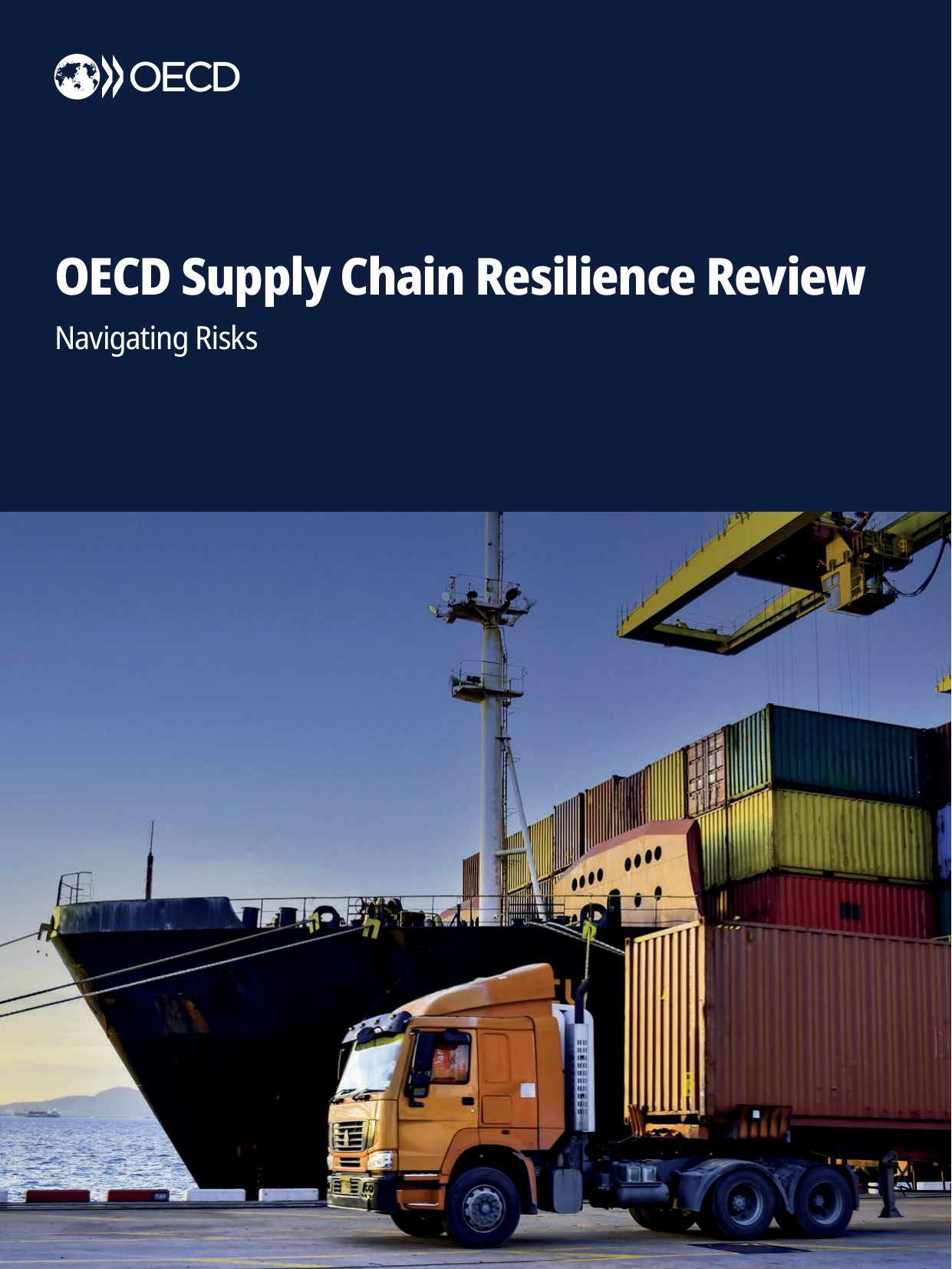
OECD Supply Chain Resilience Review
(공급망 위험, 고립이 아닌 항해로 — OECD 공급망 회복력 검토)목차
Table of contents
Preface 3
Acknowledgements 4
Abbreviations 5
Executive summary 10
1 Overview 12
1.1. Supply chains enable competitive production 13
1.2. Current trade flows are relatively well diversified, but there are some trends towards overconcentration
14
1.3. Some sectors and countries may be more exposed to shocks than others 15
1.4. Relocalising supply chains may result in GDP declines and more variable output for most
countries 16
1.5. Global supply chains are affected by the digital transformation and by policies pursuing
environmental objectives 17
1.6. Supply chains can be resilient without undermining the benefits of open markets 19
1.7. Policy approaches for agile, adaptable and aligned supply chains 19
References 22
Note 22
Part I Monitoring supply chain interdependencies 23
2 The state of international supply chains 24
2.1. International supply chains have boosted efficiency, created new opportunities and reduced
poverty 25
2.2. Production and trade are more globalised than ever 27
2.3. Trends vary across countries and industries: Slowbalisation? 28
References 38
Notes 40
3 Understanding trade dependency and the impacts of disruptions 41
3.1. Perceptions of increasing external shocks undermine trust in trade 42
3.2. Anticipating risks associated with trade dependency 45
3.3. National imports and exports have become more concentrated 47
3.4. OECD Member countries have relatively low trade concentration, but have scope to
diversify further 50
3.5. Global and OECD trade dependency on China has increased significantly, but China also
depends on OECD countries 55
3.6. Supply chain shocks need to be understood and anticipated 63
3.7. Does re-localising or reducing trade minimise exposure to shocks and lower trade
dependency? 68
References 71
Notes 74
4 The digital transformation, environmental objectives and international supply
chains 77
4.1. The digital transformation and the pursuit of environmental sustainability objectives
introduce both opportunities and vulnerabilities 78
4.2. Promoting social and environmental sustainability along supply chains 85
References 94
Notes 96
Part II Beyond resilience: Agile, adaptable and aligned supply chains 97
5 Risk management at the firm-level 98
5.1. Firms use various strategies to build resilient supply chains 100
5.2. Firms adopt a systemic approach to risks 101
5.3. Triple-A supply chains can deal with uncertainty and change, while preserving the benefits
of open trade 102
References 103
Note 104
6 Policy environments that enable agility, adaptability and alignment 105
6.1. Trade facilitation measures for goods increase the agility and adaptability of supply chains 106
6.2. Supporting services can underpin adaptable supply chains 114
6.3. Better digital transformation policies will make supply chains more resilient and agile 121
6.4. International co-operation, and co-ordination with the private sector bolster resilience 126
References 128
Notes 130
7 Policies can balance sustainability, efficiency and resilience 131
7.1. Synergies between resilience, efficiency and sustainability can be captured 132
7.2. Trade-offs need to be addressed when balancing objectives 132
7.3. Targeting sustainability requires protecting resilience and efficiency 133
References 134
Annex A. A guide to using the country by country data 135
Annex B. Country by country data 143
해시태그
관련자료



AI 요약·번역·분석 서비스
AI를 활용한 보고서 요약·번역과 실시간 질의응답 서비스입니다.
OECD Supply Chain Resilience Review
(공급망 위험, 고립이 아닌 항해로 — OECD 공급망 회복력 검토)
국가전략포털에서 실시간 AI 질의응답 서비스를 시작합니다. 4가지 유형의 요약과 번역을 이용해보시고, 보고서에 대해 추가로 알고 싶은 내용이 있으면 채팅창을 통해 자유롭게 AI에게 물어볼 수 있습니다.
※ 제공하는 정보는 참고용이며, 정확한 사실 확인이 필요할 수 있습니다. 민감한 개인정보는 입력하지 마십시오.