
- 주제별 국가전략 목록으로 이동
- 주제별 국가전략
- 전체
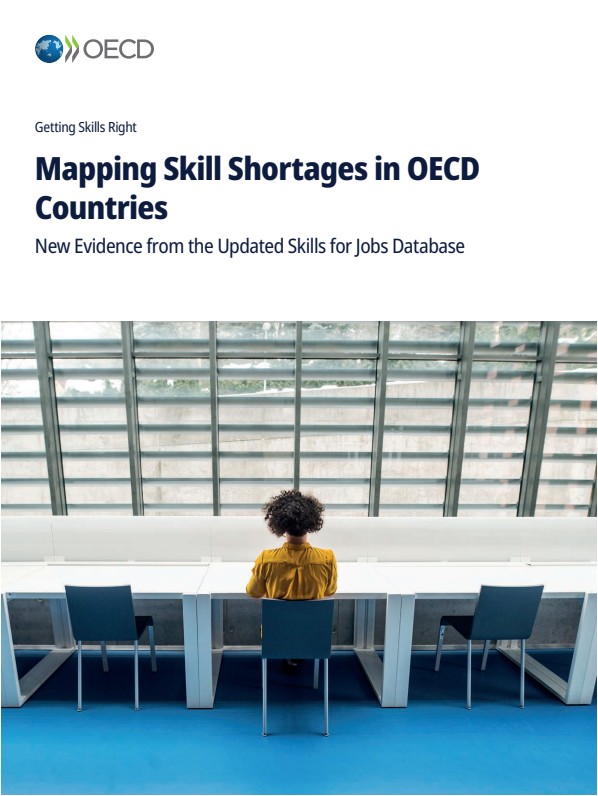
Mapping skill shortages in OECD countries : new evidence from the updated skills for jobs database
(OECD 국가의 숙련인력 부족 현황: 개정된 직무능력 데이터베이스를 통한 새로운 분석)목차
Title page 1
Contents 8
Foreword 4
Abbreviations and acronyms 5
Executive summary 6
1. Introduction 10
1.1. Causes and consequences of skill imbalances 11
1.2. Definitions and measures of skill imbalances 12
2. Methodological considerations 16
2.1. Indicators of occupational imbalances 17
2.1.1. Wages 18
2.1.2. Employment 19
2.1.3. Unemployment rate 19
2.1.4. Hours worked 19
2.1.5. Vacancies 19
2.1.6. Underqualification 20
2.2. Method behind the Skills for Jobs Indicator 22
2.2.1. Step 1: Computing occupational imbalances 22
2.2.2. Step 2: Translating occupation shortages into skill shortages 25
3. Occupational imbalances, skill shortages and policy implications 27
3.1. Occupational imbalances 28
3.1.1. Occupational imbalances over time 32
3.1.2. Occupational imbalances at the industry level 38
3.2. Knowledge, abilities and skill shortages 40
3.2.1. Knowledge shortages 40
3.2.2. Ability shortages 42
3.2.3. Skill shortages 43
3.3. Policy implications 45
References 49
Annex A. Supporting material 62
Notes 80
Table 3.1. High-skilled occupations are generally in shortage 29
Table 3.2. Middle-skilled, non-manual occupations are generally in surplus 30
Table 3.3. Lower-skilled occupations are generally in surplus 31
Table 3.4. Shortages are persistent in the OECD Member countries 33
Table 3.5. Occupational imbalances in Australia from 2019-2025 34
Table 3.6. Occupational imbalances in France from 2019-2024 35
Table 3.7. Occupational imbalances in the United Kingdom from 2019-2024 36
Table 3.8. Occupational imbalances in the United States from 2019-2024 37
Figure 2.1. Labour market signals underlying the Skills for Jobs Indicator 18
Figure 3.1. Key industries face significant shortages 39
Figure 3.2. Growth in OJP and wage point to shortages for occupations in the accommodation and food services industry, while hours worked and... 40
Figure 3.3. Knowledge areas associated with high-skilled occupations are generally in shortage 41
Figure 3.4. Cognitive abilities are in shortage, while physical and psychomotor abilities are in balance 42
Figure 3.5. Essential, social and system skills are in shortage, while remaining skills are closer to balance 44
Figure 3.6. Low representation of women among ICT professionals and technicians 46
Figure 3.7. Low representation of men and younger workers among health professionals and health associate professionals 47
Figure 3.8. Teaching professionals include relatively few men and younger workers 48
Boxes 13
Box 1.1. The evolution of the concept of skills in economics 13
Box 1.2. Terminology 15
Box 2.1. Approaches to measuring imbalances 17
Box 2.2. COVID-19 impact on labour market indicators 21
Box 2.3. Definitions of the signals underlying the occupational imbalance indicator 23
Box 2.4. O*NET occupation profiles and their use for the Skills for Jobs Indicator 25
Box 3.1. Policy recommendations for occupations facing the greatest shortages in OECD Member countries 46
Table A.1. Overview of data and country-specific indicator specifications 62
Table A.2. Occupational imbalances for the latest available year, by industry and country 72
Table A.3. Knowledge shortages for the latest available year, by country 74
Table A.4. Ability shortages for the latest available year, by country 76
Table A.5. Shortages of essential skills for the latest available year, by country 77
Table A.6. Shortages of transferable skills for the latest available year, by country 78
해시태그
관련자료


AI 요약·번역·분석 서비스
AI를 활용한 보고서 요약·번역과 실시간 질의응답 서비스입니다.
Mapping skill shortages in OECD countries : new evidence from the updated skills for jobs database
(OECD 국가의 숙련인력 부족 현황: 개정된 직무능력 데이터베이스를 통한 새로운 분석)
국가전략포털에서 실시간 AI 질의응답 서비스를 시작합니다. 4가지 유형의 요약과 번역을 이용해보시고, 보고서에 대해 추가로 알고 싶은 내용이 있으면 채팅창을 통해 자유롭게 AI에게 물어볼 수 있습니다.
※ 제공하는 정보는 참고용이며, 정확한 사실 확인이 필요할 수 있습니다. 민감한 개인정보는 입력하지 마십시오.