


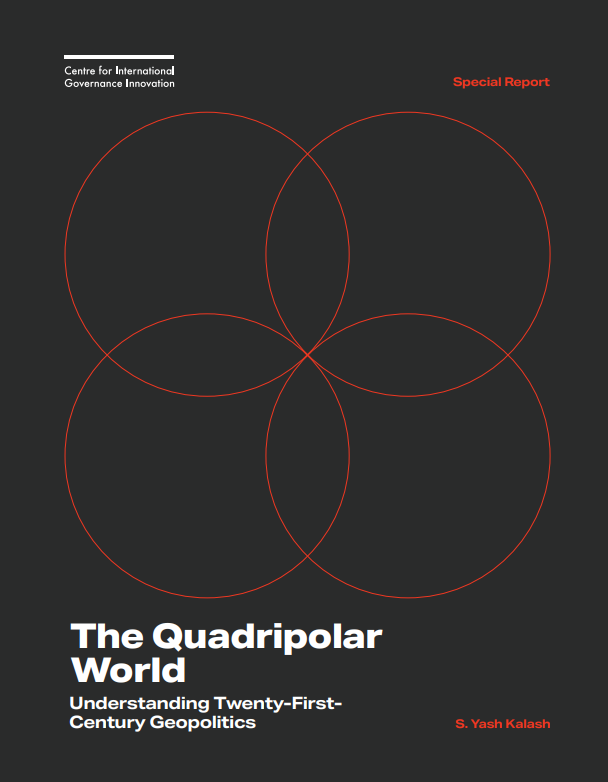
- 이에 따라 보고서는 미국, 중국, 인도, 러시아를 4개의 전략적 중심축으로 간주하는 새로운 분석틀인 4극 체제(Quadripolar Geopolitical Framework, QGF)를 제안함
- QGF는 주요국 간의 관계를 ‘이념 정렬(Ideological alignment) ↔ 전략적 자율성(Strategic autonomy)’, ‘체제 경쟁(Systemic rivalry) ↔ 경제적 상호의존(Economic interdependence)’이라는 두 개 축을 기준으로 네 개의 사분면으로 구분하여 분석함
- EU, 브라질, 한국 등 중견국의 능동적 외교와 BRICS+, Quad 등 모듈형 다자주의의 부상도 분석에 반영됨
□ QGF는 미국, 중국, 인도, 러시아 간 주요 관계를 네 가지 사분면으로 구분하여 설명함
① 미국-인도: ‘전략적 협력(The Strategic Coordination Game)’ 관계
- 민주주의와 기술 기반의 전략적 협력 관계
- 안보·공급망·디지털 인프라 분야에서 깊은 협력을 보이며, 이념 정렬과 상호의존성이 모두 높음
② 중국-러시아: ‘반서방 연합(The Anti-Coalition Game)’ 관계
- 권위주의적 체제 간 실용적 연대
- 서방 견제라는 공동 목적 하에, 제한된 상호의존성을 가짐
③ 인도-러시아: ‘반복적 협상(The Repeated Bargaining Game)’ 관계
- 냉전의 유산과 전략적 자율성을 바탕으로 한 실용적 협력
- 국방과 에너지 분야에서 반복적인 조건부 협력이 이루어짐
④ 미국-중국: ‘경쟁적 상호의존(The Strategic Dilemma Game)’ 관계
- 심화된 경제 상호의존성과 동시에 기술패권 경쟁, 대만 문제 등에서의 전략적 대립이 공존
- 가장 불안정한 관계
□ 보고서는 QGF가 전통적인 동맹 구도나 다극 질서 논의를 넘어, 현대 국제관계의 비선형성과 전략적 모호성을 설명할 수 있는 유용한 틀이라고 주장함
- 특히 중견국들의 다자주의적 조정 역할과 개별 정책 이슈를 기준으로 외교 파트너를 유연하게 선택하는 이슈 기반 외교가 강조됨
- 고정된 진영 구도가 아닌 복합적, 다층적인 외교행위가 국제 질서를 형성해 나간다고 봄
- QGF는 향후 국제정세 변화에 따라 유연하게 수정·보완될 수 있는 분석도구로 제시되며, 새로운 세계질서의 복잡성을 이해하고 정책적 선택지를 탐색하는 데 기여할 수 있음
목차
Title page 1
Contents 3
About the Author 4
Acronyms and Abbreviations 4
Executive Summary 5
Introduction: A Fluid and Fragmented Geopolitical Landscape 5
The Four Poles: Why the United States, China, India and Russia Will Define the Twenty-First Century 6
The QGF: Concept and Analytical Utility 10
Case Studies and Scenarios: Applying the Framework 14
Limitations of the QGF 34
Conclusion: Navigating Strategic Fluidity in a Fragmented World 36
Works Cited 37
Tables 15
Table 1. India-US Game Theoretic Interpretation 15
Table 2. China-Russia Game Theoretic Interpretation 18
Table 3. India-Russia Game Theoretic Interpretation 21
Table 4. US-China Game Theoretic Interpretation 25
Table 5. US-Russia Game Theoretic Interpretation 29
Table 6. India-China Game Theoretic Interpretation 32
Figures 7
Figure 1. Polarity Criteria Matrix: Assessing Major Global Actors 7
Figure 2. The QGF 11
Figure 3. Strategic Ecosystem Map: Middle-Power Engagement with India-US (Quadrant I) 16
Figure 4. Strategic Ecosystem Map: Middle-Power Engagement with China-Russia (Quadrant II) 19
Figure 5. Strategic Ecosystem Map - Middle-Power Engagement with India-Russia (Quadrant III) 23
Figure 6. Strategic Ecosystem Map - Middle-Power Engagement with US-China(Quadrant IV) 26
Figure 7. The QGF and the Two Dyads 28
Figure 8. Middle-Power Engagement in the US-Russia Dyad 31
Figure 9. Middle-Power Engagement in the India-China Dyad 33