
- 주제별 국가전략 목록으로 이동
- 주제별 국가전략
- 전체
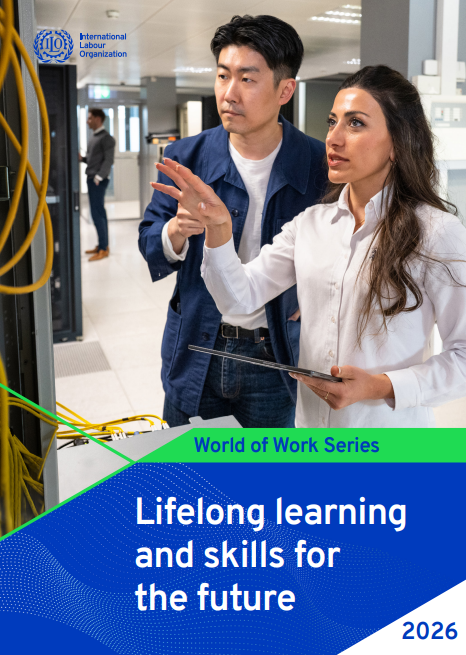
Lifelong learning and skills for the future
(평생 학습과 미래를 위한 역량)목차
Foreword III
Acknowledgements IV
Abbreviations VII
Executive summary IX
Part 1. A broad view of lifelong learning XXIV
Chapter 1. Exploring lifelong learning: History and concepts of skills promotion 1
1.1. Introduction 1
1.2. Historical evolution of the lifelong learning concept 3
1.2.1. From lifelong education to lifelong learning 3
1.2.2. The ILO and lifelong learning 11
1.3. Constructing a definition of lifelong learning 13
1.3.1. Lifelong learning in ILO instruments and other key documents 13
1.3.2. Stakeholder perspectives on lifelong learning in the world of work 16
1.3.3. Definition of lifelong learning 18
1.4. Operationalizing lifelong learning 19
1.4.1. Conceptual framework of lifelong learning used in this report 19
1.4.2. Lifelong learning as a system: Challenges and implementation 22
1.4.3. Diversity in the evolution of lifelong learning systems 23
1.5. Conclusion 25
References 26
Chapter 2. Lifelong learning worldwide: Measuring its three dimensions 35
2.1. Introduction 35
2.2. Lifelong learning in education 37
2.2.1. Investment in education 38
2.2.2. Educational outcomes and exclusion 39
2.3. Lifelong learning in the world of work 44
2.3.1. Overview of learning in the world of work 47
2.3.2. Different types of lifelong learning in the world of work 52
2.3.3. The central role of employers' and workers' organizations 63
2.4. Broader societal learning dimension 63
2.4.1. Engagement in opportunities for societal learning 64
2.4.2. Willingness to learn in society 65
2.5. Conclusion 68
References 69
Part 2. Skills for transformation and resilience 74
Chapter 3. The case for skills development: Which skills and for what? 75
3.1. Introduction 75
3.2. Data and approach 77
3.3. Assessing employers' demand and workers' supply of skills 82
3.3.1. Skills requirements in employers' vacancies 82
3.3.2. Skills supplied by workers 89
3.4. Skills bundles and skills interconnectedness 93
3.4.1. Identifying skill interconnections 94
3.4.2. Characterizing skill interconnections 99
3.5. Skills for better-quality employment opportunities 103
3.5.1. How skills influence wage levels 103
3.5.2. The relationship between skills and non-wage attributes 109
3.6. Conclusion 117
References 118
Chapter 4. The role of skills amid global transformations 127
4.1. Introduction 127
4.2. Valuing skills in care work to accompany demographic shifts 129
4.2.1. Rising demand for care work 129
4.2.2. Paid care workers and their working conditions 131
4.2.3. Valuation of paid care workers' skills 133
4.3. Skills to navigate the green transition 136
4.3.1. Environmental transformations and their impact on labour markets 136
4.3.2. Identifying green skills 137
4.3.3. "Greenness" of jobs and occupations 141
4.3.4. Beyond green skills: Skills for green jobs 145
4.3.5. Job quality and equity 148
4.4. Skills for adaptability in the digital transformation 152
4.4.1. Digital transformation and its impact on labour markets 152
4.4.2. Skills as a driver of resilience 158
4.5. Conclusion 162
References 164
Part 3. Making lifelong learning systems deliver 172
Chapter 5. Delivering on lifelong learning: Policy solutions for skills provision 173
5.1. Introduction 173
5.2. Challenges to lifelong learning provision and adoption 174
5.2.1. Barriers hindering individuals' participation 174
5.2.2. Institutional barriers to delivery 177
5.3. Performance and effectiveness of lifelong learning systems 180
5.3.1. Coordination and governance as drivers of performance 180
5.3.2. Improving skills programmes: What we know from evidence 183
5.3.3. What works in skills programmes: Evidence from a meta-analysis 187
5.4. Financing lifelong learning 192
5.4.1. The state of financing lifelong learning 193
5.4.2. Effectiveness of financial mechanisms beyond formal training 198
5.5. Conclusion 203
References 204
해시태그
관련자료


AI 요약·번역·분석 서비스
AI를 활용한 보고서 요약·번역과 실시간 질의응답 서비스입니다.
Lifelong learning and skills for the future
(평생 학습과 미래를 위한 역량)
국가전략포털에서 실시간 AI 질의응답 서비스를 시작합니다. 4가지 유형의 요약과 번역을 이용해보시고, 보고서에 대해 추가로 알고 싶은 내용이 있으면 채팅창을 통해 자유롭게 AI에게 물어볼 수 있습니다.
※ 제공하는 정보는 참고용이며, 정확한 사실 확인이 필요할 수 있습니다. 민감한 개인정보는 입력하지 마십시오.