
- 주제별 국가전략 목록으로 이동
- 주제별 국가전략
- 전체
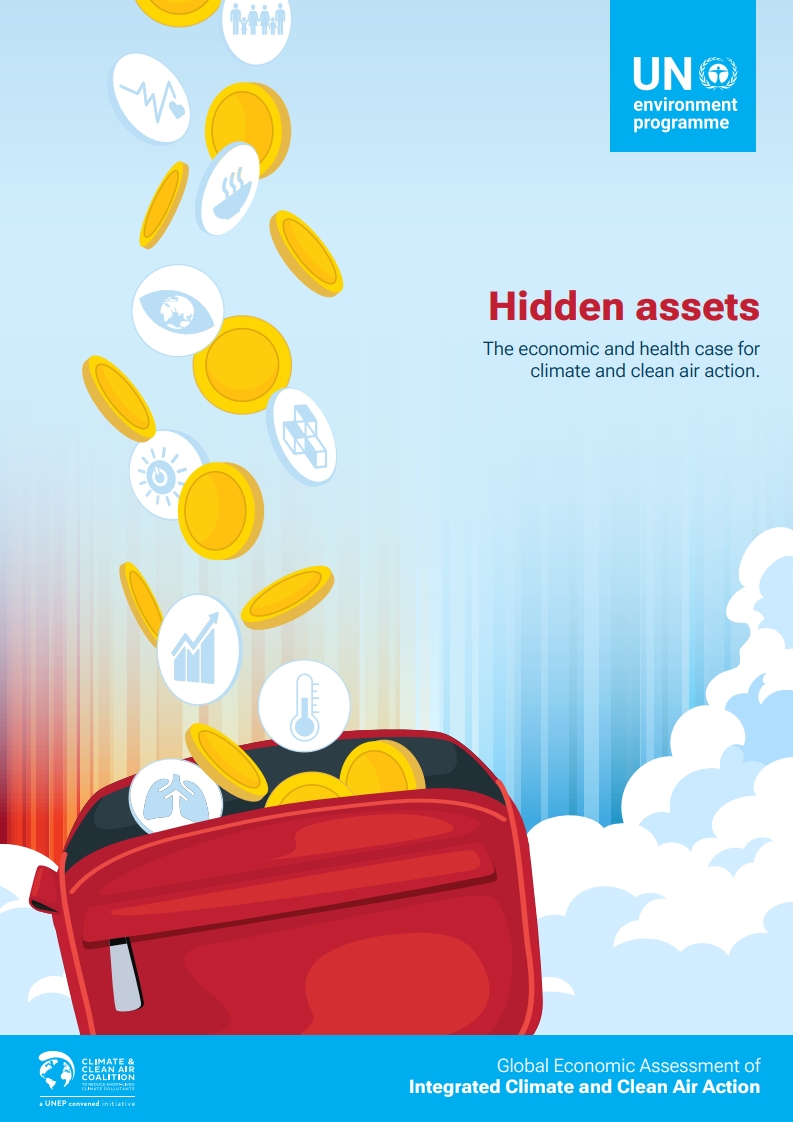
Hidden assets: The economic and health case for climate and clean air action
(숨겨진 자산: 기후 및 청정 공기 조치를 위한 경제적·보건적 근거)목차
Acknowledgements iii
Abbreviations vi
Terms and definitions x
Table of contents xxi
Foreword xxiii
Preface xxiv
Audience and focus xxv
Executive summary xxvi
Integrated action on climate and clean air is one of the highest-return investments available to governments today xxvii
Air pollution is a macroeconomic risk, not an environmental add-on xxix
Greater than the sum: integration increased returns xxxi
Time is money: delay locks in avoidable costs xxxii
The benefits materialise everywhere, across all regions and over different timescales xxxiii
Enabling conditions are as important as technology choices xxxvi
The 25 solutions deliver on governments’ existing commitments, not just future aspirations xxxvii
Call to action xxxix
Chapter 1 - Rationale for this Assessment 1
1.1 Introduction to an integrated approach 2
1.2 Historic emissions and concentrations 5
1.3 Economic impacts of climate change and air pollution 8
1.3.1 Cost and benefit valuation 8
1.4 Past assessments of air pollution and climate change impacts 9
1.4.1 Health impacts of air pollution 9
1.4.2 Major impacts of climate change 12
1.5 Introduction to the enabling environment 12
1.6 Scope and objectives of the Assessment 13
1.7 Guide to the Assessment 17
Chapter 2 - Scenarios and solutions 18
Key messages 18
2.1 Introduction to scenarios and solutions 19
2.1.1 Key features of the baseline scenario 21
2.2 Emission outlook under the baseline scenario 24
2.3 Key features of the integrated action scenario 25
2.4 Emissions outlook under the integrated action scenario 29
2.4.1 Importance of sectors for mitigation potential and regional variation 34
2.5 Quantifying implementation costs of the scenarios 37
2.5.1 Climate and air pollution control costs in the baseline scenario 40
2.5.2 Costs of implementing the 25 integrated solutions 41
2.5.3 Regional distribution of costs 42
2.6 Unlocking the mitigation opportunities: why enabling implementation matters 43
Chapter 3 – Benefits and costs 50
Key messages 50
3.1 Methods for quantifying air quality and climate benefits 52
3.1.1 Exposure of people to air pollution under the baseline and integrated action scenarios 54
3.1.2 Health impacts of air pollution under the baseline and integrated action scenarios 61
3.1.3 Estimating the degree of climate change to 2100 under the baseline and integrated action scenarios 66
3.1.4 Effects of climate change on human health and labour productivity under the baseline and integrated action scenarios 71
3.2 Economic valuation of the air pollution and climate change impacts and benefits of further action 73
3.2.1 Economic benefits from reduction in air pollution under the integrated action scenario 74
3.2.2 Economic benefits from avoided warming under the integrated action scenario 79
3.2.3 Combined risks from air pollution and warming on agriculture 81
3.3 Economy-wide impacts of air pollution and climate change 82
3.4 Benefit-cost analysis of the 25 integrated solutions 90
3.5 Regional priorities: which solutions deliver the greatest benefits and when 93
3.6 Further benefits and trade-offs 97
Chapter 4 - Breaking down barriers and building enabling environments for climate change and clean
air solutions 100
Key messages 100
4.1 Introduction 101
4.2 China 104
4.2.1 Setting the context: integrating air pollution and climate change in China 104
4.2.2 Transport 105
4.2.3 Renewable and residential energy 105
4.2.4 Waste and agriculture 106
4.2.5 Enabling implementation and overcoming barriers in China 107
4.3 India 107
4.3.1 Setting the context: integrating air pollution and climate change in India 107
4.3.2 Transport 109
4.3.3 Renewable and residential energy 109
4.3.4 Waste and agriculture 110
4.3.5 Enabling implementation and overcoming barriers in India 111
4.4 Mexico 111
4.4.1 Setting the context: integrating clean-air and climate planning 111
4.4.2 Transport 111
4.4.3 Renewable and residential energy 112
4.4.4 Waste and agriculture 113
4.4.5 Opportunities to accelerate implementation in Mexico 115
4.5 Nigeria 115
4.5.1 Setting the context: integrating air pollution and climate planning in Nigeria 115
4.5.2 Transport 116
4.5.3 Renewable and residential energy 116
4.5.4 Waste and agriculture 116
4.5.5 Enabling implementation in Nigeria 117
4.6 Towards a systemic framework for building an enabling environment 118
Chapter 5 - Conclusion and the way forward 125
5.1 Integrated action reduces multiple forms of damage through the 25 solutions 125
5.2 Health benefits arrive early and outweigh costs within a decade 126
5.3 Enabling conditions determine whether and when the benefits are realised 127
5.4 Aligning the findings with global commitments and targets 128
5.5 Remaining challenges and the way forward 131
5.6 What can governments and partners do now? 133
References 135
해시태그
관련자료


AI 요약·번역·분석 서비스
AI를 활용한 보고서 요약·번역과 실시간 질의응답 서비스입니다.
Hidden assets: The economic and health case for climate and clean air action
(숨겨진 자산: 기후 및 청정 공기 조치를 위한 경제적·보건적 근거)
국가전략포털에서 실시간 AI 질의응답 서비스를 시작합니다. 4가지 유형의 요약과 번역을 이용해보시고, 보고서에 대해 추가로 알고 싶은 내용이 있으면 채팅창을 통해 자유롭게 AI에게 물어볼 수 있습니다.
※ 제공하는 정보는 참고용이며, 정확한 사실 확인이 필요할 수 있습니다. 민감한 개인정보는 입력하지 마십시오.