
- 주제별 국가전략 목록으로 이동
- 주제별 국가전략
- 전체
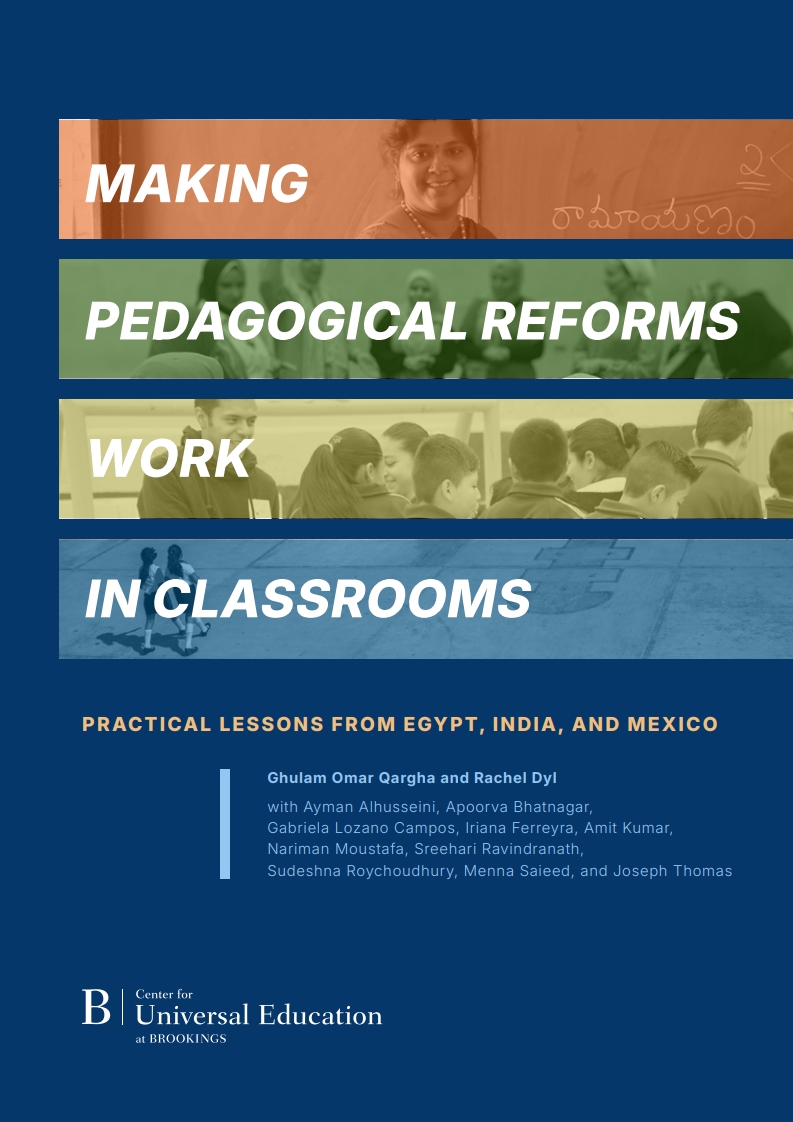
Making pedagogical reforms work in classrooms: Practical lessons from Egypt, India, and Mexico
(교실 현장에서 교육 개혁을 성공적으로 구현하기: 이집트, 인도, 멕시코의 실천적 교훈)목차
Acronyms 5
Executive summary 8
1. Introduction: Pedagogical reforms must align with local contexts 10
1.1 The need for education system transformation
1.2 Teachers as interpreters of reforms
1.3 How teachers interpret and enact pedagogical reforms in classrooms
2. The IPM framework: How context shapes classroom practice 13
2.1 From coherent systems on paper to lived classroom reality
2.2 Three interconnected categories that shape teaching
2.3 Why the same reform works differently
3. Three reforms, three contexts: Research design and methods 16
3.1 Why Egypt, India, and Mexico?
3.2 Research policy collaboratives: Methodology as theory of change
3.3 Data sources and cross-country synthesis process
4. What three countries reveal: IPMs in action across Egypt, India, and Mexico 21
4.1 Culture: How teachers understand their role
4.2 Education ecosystems: What makes reform feasible
4.3 Learning theories: How teachers blend approaches
4.4 Where the three cases diverge: What differences teach us
5. Power, equity, and the limits of the IPM lens 31
5.1 Power, equity, and whose experiences matter
5.2 What IPMs do, and do not, explain
6. What system leaders can do differently 33
6.1 Design for translation, not transfer
6.2 Align ecosystems before scaling new pedagogies
6.3 Make professional learning and co-design central, not peripheral
Conclusion: From technical fixes to relational work 38
References 40
해시태그
관련자료


AI 요약·번역·분석 서비스
AI를 활용한 보고서 요약·번역과 실시간 질의응답 서비스입니다.
Making pedagogical reforms work in classrooms: Practical lessons from Egypt, India, and Mexico
(교실 현장에서 교육 개혁을 성공적으로 구현하기: 이집트, 인도, 멕시코의 실천적 교훈)
국가전략포털에서 실시간 AI 질의응답 서비스를 시작합니다. 4가지 유형의 요약과 번역을 이용해보시고, 보고서에 대해 추가로 알고 싶은 내용이 있으면 채팅창을 통해 자유롭게 AI에게 물어볼 수 있습니다.
※ 제공하는 정보는 참고용이며, 정확한 사실 확인이 필요할 수 있습니다. 민감한 개인정보는 입력하지 마십시오.