
- 주제별 국가전략 목록으로 이동
- 주제별 국가전략
- 전체
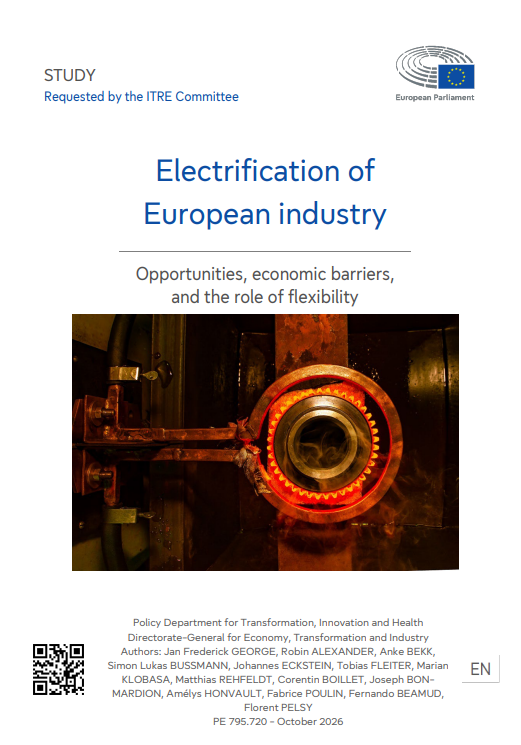
Electrification of European industry - Opportunities, economic barriers, and the role of flexibility
(유럽 산업 전기화: 기회와 경제적 장벽, 유연성의 역할)목차
CONTENTS 3
LIST OF ABBREVIATIONS 7
LIST OF BOXES 9
LIST OF FIGURES 9
LIST OF TABLES 11
EXECUTIVE SUMMARY 13
1. INTRODUCTION AND BACKGROUND 16
1.1. Background and policy context 16
1.2. Objectives and scope of the study 19
1.3. Structure of study / Methodological approach 19
2. STATE OF ELECTRIFICATION OF EU INDUSTRY 21
2.1. Current electrification levels across EU industry 22
2.1.1. EU27 overview 22
2.1.2. Comparison between industrial subsectors 23
2.1.3. Country comparison 24
2.2. Electrification trends since 2010 26
2.2.1. Historical development 26
2.2.2. Pre- and post-energy crisis analysis 28
2.3. Sectoral deep-dives 31
2.3.1. Energy-intensive industries 32
2.3.2. Industrial electrification is progressing along various paths 42
3. TECHNOLOGICAL READINESS AND BENEFITS OF ELECTRIFICATION 43
3.1. Process heat demand in EU industry 43
3.2. Maturity of general process heat electrification technologies 44
3.3. Electrification of major process heat applications 46
3.4. Energy efficiency potentials from electrification 53
3.5. Innovation gaps and R&D needs 53
3.5.1. Technologies for steam and hot water supply expect incremental improvements 54
3.5.2. Technology gaps in high-temperature processes 54
3.5.3.Prospective technologies 55
3.5.4. Manufacturing capacity needs 55
3.6. Technical electrification potential in the EU27 industry 55
3.6.1. Method and objective 55
3.6.2.Assessment of technology maturity 56
3.6.3.Estimation of EU27 electrification potentials 59
3.6.4.Results: Electrification potentials 62
3.7. Benefits of electrification 64
3.7.1. Avoided fuel use 65
3.7.2.Avoided greenhouse gas emissions 67
3.7.3.Reduced imports of fossil fuels 70
3.7.4.Avoided fossil fuel spending 72
4. STRUCTURAL AND REGULATORY BARRIERS 75
4.1. EU policy framework for industrial electrification 76
4.1.1. European Grids Package 77
4.1.2. Electrification Action Plan 79
4.1.3. EU ETS and related industrial decarbonisation instruments 80
4.1.4. Forthcoming post-2030 energy policy framework 82
4.2. Identification of structural and regulatory barriers 82
4.2.1. Grid access 84
4.2.2.Electricity gas price ratio 87
4.2.3.Phase out of fossil fuel subsidies 100
4.2.4.Carbon pricing instruments 100
4.2.5. Lead markets 102
4.2.6.Workforce and skills 103
5. COMPETITIVENESS AND ECONOMIC VIABILITY 104
5.1. Part I – Techno-economic assessment 104
5.1.1. Analytical framework and modelling approach 104
5.1.2. Cost drivers of electrification 105
5.1.3. LCOH comparison 108
5.1.4. Sensitivity analysis 112
5.1.5. Investment needs and global competitiveness 116
5.1.6. Conclusions on cost gap and identification of economic barriers 118
5.2. Part II – Policy instruments to address competitiveness gaps 119
5.2.1. Overarching barrier: Increased risk profile of decarbonised production 119
5.2.2.Existing support instruments and results overview 121
5.2.3. Summary: Assessment of effectiveness 125
6. ROLE OF FLEXIBILITY IN INDUSTRIAL ELECTRIFICATION 127
6.1. Characteristics of industrial flexibility 128
6.1.1. The motivation for flexibility: price and CO2 volatility in electricity markets 128
6.1.2. Typology of industrial flexibility 130
6.1.3. Distinction between different types of potential 131
6.1.4. Monetisation mechanisms and markets 132
6.2. Flexibilisation of production processes: technologies and their application 134
6.2.1. Iron and steel industry 134
6.2.2.Non-metallic minerals 135
6.2.3.Chemicals and pharmaceuticals 137
6.2.4.Non-ferrous metal 138
6.2.5.Conclusions on the flexibilisation of industrial production processes 138
6.3. Energy storage: technologies and their application 139
6.3.1. Thermal storage 139
6.3.2.Battery storage 143
6.4. Hybrid systems: technologies and applications 145
6.5. Market revenue potentials of industrial flexibility 146
6.6. Barriers to industrial flexibility 148
6.6.1. Technological barriers 148
6.6.2.Economic barriers 149
6.6.3.Regulatory and market barriers 149
6.6.4.Other barriers 150
6.6.5. Discussion on barriers 150
6.7. Strategic role of flexibility for electrification and the energy system 151
7. POLICY RECOMMENDATIONS 153
7.1. Main findings of the study and policy needs 153
7.1.1. Technological availability 154
7.1.2. Grid access 156
7.1.3. Electricity gas price ratio 158
7.1.4. Fossil fuel subsidies 162
7.1.5. Flexibility 162
7.1.6. Carbon pricing instruments 164
7.1.7. Lead markets 164
7.1.8. Investment risk and cost gap 165
7.1.9. Workforce and skill 167
7.2. Implementation priorities and coordinated actions 167
7.2.1. Summary of policy actions 167
7.2.2. Short-term priorities 170
7.2.3. Medium-term priorities 171
8. CONCLUSION 173
REFERENCES 175
ANNEX 1: STATE OF ELECTRIFICATION – SUB-SECTORAL DEEP-DIVES 184
해시태그
관련자료



AI 요약·번역·분석 서비스
AI를 활용한 보고서 요약·번역과 실시간 질의응답 서비스입니다.
Electrification of European industry - Opportunities, economic barriers, and the role of flexibility
(유럽 산업 전기화: 기회와 경제적 장벽, 유연성의 역할)
국가전략포털에서 실시간 AI 질의응답 서비스를 시작합니다. 4가지 유형의 요약과 번역을 이용해보시고, 보고서에 대해 추가로 알고 싶은 내용이 있으면 채팅창을 통해 자유롭게 AI에게 물어볼 수 있습니다.
※ 제공하는 정보는 참고용이며, 정확한 사실 확인이 필요할 수 있습니다. 민감한 개인정보는 입력하지 마십시오.