
- 주제별 국가전략 목록으로 이동
- 주제별 국가전략
- 전체
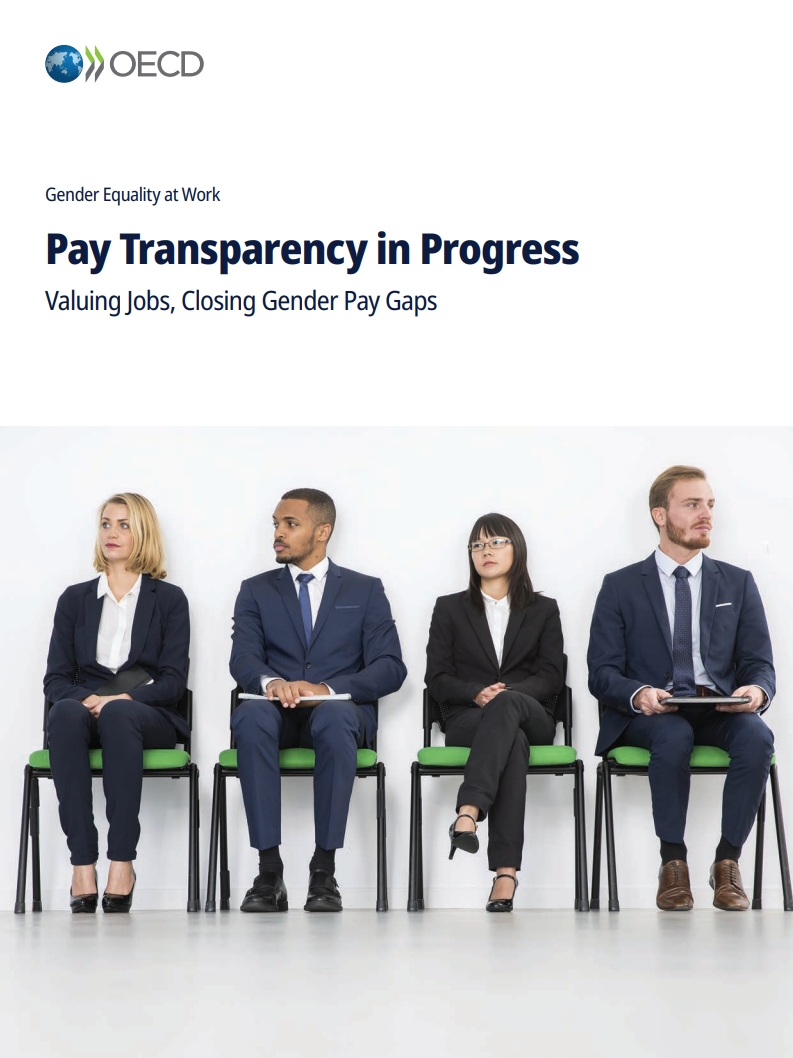
Pay Transparency in Progress: Valuing Jobs, Closing Gender Pay Gaps
(진행 중인 임금 투명성: 직무 가치 평가와 성별 임금 격차 해소진행 중인 임금 투명성: 직무 가치 평가와 성별 임금 격차 해소)목차
Foreword 3
Acknowledgements 4
Executive summary 8
1 Pay transparency in progress 10
1.1. Progress in closing the gender pay gap remains painfully slow 11
1.2. The principle of equal pay for work of equal value is a cornerstone of gender equality in the labour market 14
1.3. Pay transparency tools are increasingly popular, with approaches evolving rapidly 15
1.4. Pay transparency systems are in transition 18
1.5. Well-designed pay transparency measures can narrow pay gaps 25
1.6. Key findings and policy recommendations for governments 31
References 32
Notes 35
2 Gender-neutral job evaluation and classification 37
2.1. What are gender-neutral job evaluation and classification systems? 38
2.2. Job evaluation systems help assess and compare the value of diverse work 41
2.3. Gender-neutral job classifications are not (yet) the norm 52
2.4. Countries are supporting employers in conducting job evaluations and classifications 58
2.5. The EU Pay Transparency Directive drives convergence on job evaluation and classifications 67
References 70
Notes 72
3 Pay transparency in the OECD: An overview 73
3.1. Pay gap reporting is set to become the norm across OECD countries 75
3.2. Coverage: Who reports, and when? 79
3.3. Content: What do companies need to report? 82
3.4. Pay auditing: Must companies analyse or address pay inequalities? 84
3.5. Communicating requirements and results: How to drive impact? 86
3.6. Oversight: How do countries ensure compliance? 90
3.7. Driving efficiency: How are countries leveraging digital tools and data? 96
3.8. Pre-employment salary transparency 98
References 109
Notes 113
4 Pay transparency in practice: OECD case studies 116
4.1. Introduction and overview of the case studies 118
4.2. Pay transparency in Belgium 121
4.3. Pay transparency in France 129
4.4. Pay transparency in Portugal 138
4.5. Pay transparency in Spain 146
References 154
Notes 156
Annex A. Overview of measures to help employers or social partners implement gender-neutral job evaluation and classification schemes 159
Annex B. Key actors involved in the definition and implementation of changes related to the EU Pay Transparency Directive 176
Annex C. Information about pay reporting measures in the public and private sectors 179
References 184
Annex D. Required content in private sector pay reporting 185
References 189
Annex E. Job classification systems required or suggested to be used in private sector gender pay reporting 190
References 191
해시태그
관련자료



AI 요약·번역·분석 서비스
AI를 활용한 보고서 요약·번역과 실시간 질의응답 서비스입니다.
Pay Transparency in Progress: Valuing Jobs, Closing Gender Pay Gaps
(진행 중인 임금 투명성: 직무 가치 평가와 성별 임금 격차 해소진행 중인 임금 투명성: 직무 가치 평가와 성별 임금 격차 해소)
국가전략포털에서 실시간 AI 질의응답 서비스를 시작합니다. 4가지 유형의 요약과 번역을 이용해보시고, 보고서에 대해 추가로 알고 싶은 내용이 있으면 채팅창을 통해 자유롭게 AI에게 물어볼 수 있습니다.
※ 제공하는 정보는 참고용이며, 정확한 사실 확인이 필요할 수 있습니다. 민감한 개인정보는 입력하지 마십시오.