
- 주제별 국가전략 목록으로 이동
- 주제별 국가전략
- 전체
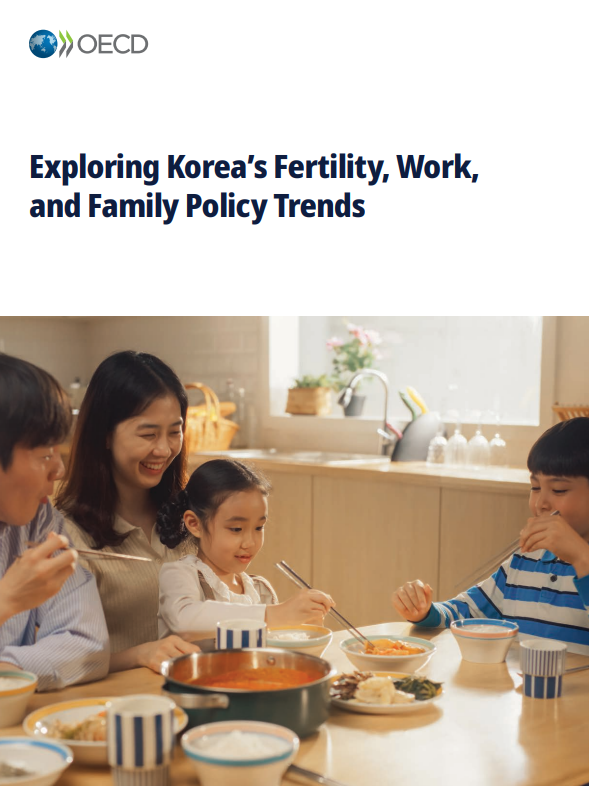
Exploring Korea’s Fertility, Work, and Family Policy Trends
(한국의 저출산과 노동·가족정책 동향)□ 한국의 초저출산은 결혼·출산에 대한 인식 변화와 고용 불안, 주거·교육비 부담, 일·가정 양립의 어려움 등이 복합적으로 작용한 결과로 분석된다.
ㅇ합계출산율은 2023년 0.72명에서 2025년 0.8명으로 상승했지만, 저출산의 장기 추세가 반전됐다고 보기는 어렵다.
ㅇ 한국은 결혼과 출산의 연계성이 높아 결혼 감소와 지연이 출산율 하락에 영향을 미치고 있으며, 50세 미만 한국인의 희망 자녀 수는 1.2명으로 OECD 평균인 1.8명보다 적다.
ㅇ 고용·임금 격차와 높은 주거·교육비 부담도 경제적 안정을 저해하고 출산을 제약하는 요인으로 작용한다.
ㅇ 중소기업 비정규직의 임금은 대기업 고임금 정규직의 약 40% 수준이며, 주거비와 고용 불안 등의 영향으로 20대의 약 80%가 부모와 동거하고 있다.
ㅇ 가계 최종소비지출에서 교육비가 차지하는 비중도 OECD 평균의 3배를 웃돈다.
□ 정부의 출산·양육 지원 지출은 1998년 GDP의 0.1%에서 2023년 1.8%로 늘었지만, 노동시장과 직장문화 개선은 상대적으로 더딘 것으로 평가된다.
ㅇ 장시간 노동과 긴 통근시간, 유연근무 활용의 제약, 여성에게 집중된 돌봄 부담 등은 일·가정 양립을 어렵게 하는 요인이다.
ㅇ 자녀가 있는 여성의 고용률은 64%로 OECD 평균인 71%보다 낮으며, 비정규직과 자영업자는 육아휴직 급여 수급에서도 제약을 받고 있다.
ㅇ 보고서는 한국의 저출산 문제에 대응하기 위해 노동시장 내 고용 격차 완화, 육아휴직·유연근무 확대, 노동시간 단축, 사교육·주거비 부담 완화, 남성의 돌봄 참여 확대 등을 제안한다.
목차
Foreword 3
Executive summary 7
1 Overview: Korea’s unique fertility, work, and family policy trends 9
1.1. Introduction 10
1.2. Marriage, fertility intentions, and gender gaps in attitudes 11
1.3. “Education fever” 13
1.4. The dual labour market 14
1.5. Policies to support the reconciliation of work and family life 18
1.6. Getting ready for the future 19
References 24
2 Unpacking declining fertility in Korea 29
2.1. Introduction and main findings 30
2.2. Fertility rates in Korea are the lowest among OECD countries 31
2.3. Koreans appear to be having fewer children than desired 38
2.4. Many interrelated social and economic factors contribute to declining fertility in Korea 40
References 56
Notes 66
3 Attitudes toward work, marriage, family and gender equality contribute to observed fertility patterns 67
3.1. Introduction and main findings 68
3.2. A complex and changing link between marriage and children in Korea 69
3.3. But why is marriage on the decline? 71
3.4. Gender issues affecting dating and mating 78
3.5. Conflict between work and family undermines fertility 83
3.6. Looking beyond work and family to consider leisure 85
3.7. Changing perceptions of the personal and social value of children 86
3.8. Going forward: What can governments do? 88
References 89
Notes 98
4 Policy increasingly supports families, but housing- and private education costs remain barriers to having more children 100
4.1. Introduction and main findings 101
4.2. Public family support is strengthening 103
4.3. The impact of family policy on fertility trends 111
4.4. Education fever 115
4.5. The cost of housing and its effect on fertility 121
References 123
Notes 137
5 Going into labour: effects of labour market institutions and work-life balance on fertility 138
5.1. Introduction and main findings 139
5.2. Setting the scene 141
5.3. Korea’s dual labour market contributes to delayed labour market entry 145
5.4. Perceptions of economic and financial insecurity are relatively high in Korea 147
5.5. Female employment around childbirth 149
5.6. The workplace culture is not family-friendly 153
References 161
Annex 5.A. Going into labour: effects of labour market institutions and work-life balance on fertility: additional figures 170
Notes 171
해시태그
관련자료



AI 요약·번역·분석 서비스
AI를 활용한 보고서 요약·번역과 실시간 질의응답 서비스입니다.
Exploring Korea’s Fertility, Work, and Family Policy Trends
(한국의 저출산과 노동·가족정책 동향)
국가전략포털에서 실시간 AI 질의응답 서비스를 시작합니다. 4가지 유형의 요약과 번역을 이용해보시고, 보고서에 대해 추가로 알고 싶은 내용이 있으면 채팅창을 통해 자유롭게 AI에게 물어볼 수 있습니다.
※ 제공하는 정보는 참고용이며, 정확한 사실 확인이 필요할 수 있습니다. 민감한 개인정보는 입력하지 마십시오.