
- 주제별 국가전략 목록으로 이동
- 주제별 국가전략
- 전체
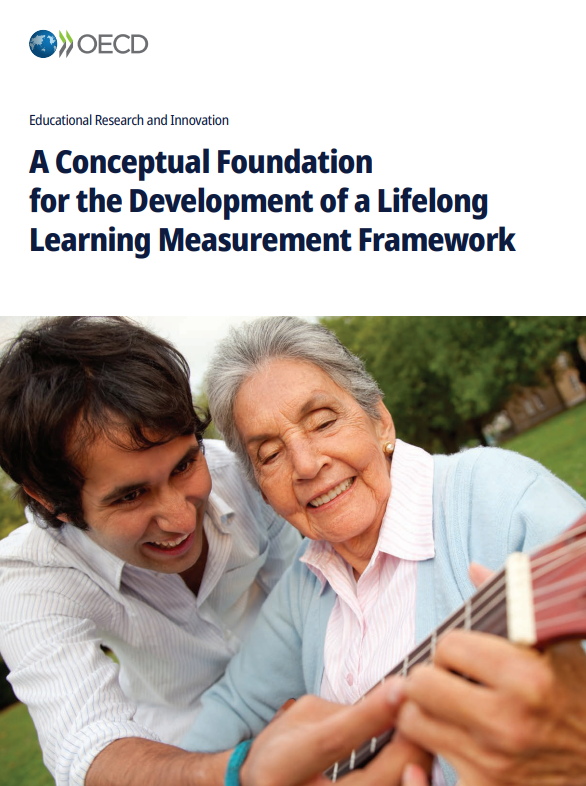
A Conceptual Foundation for the Development of a Lifelong Learning Measurement Framework
(평생 학습 측정 체계 구축을 위한 개념적 토대)목차
Foreword 3
Abstract 4
Acknowledgments 5
Executive Summary 9
1 Introduction 12
1.1. Multidimensional data space of LLL 13
1.2. From conceptual framework to data framework 15
1.3. Distinguishing data to inform research, policy design, and coordination 16
1.4. Organisation of the report 17
References 17
2 Enabling societal coordination and interactions between citizens' needs and structures 19
2.1. History and accumulation of interactions: educational careers and pathways 20
2.2. Co-ordination of learning needs: optics on who and what decides the learning needs 21
2.3. Coordination of current and future learning needs: navigating life transitions and aspirations 23
2.4. Skills surplus, deficits, and shortages: impacts on organisations and communities 23
2.5. Policy instruments for effective coordination in LLL 24
References 26
3 Conceptualising the learning needs, and demand of stakeholders 28
3.1. Learning needs and demands of citizens, organisations, communities, and nations 29
References 32
4 Understanding the prevalence and diversity of supply of learning opportunities 36
4.1. Traditional understandings of learning activities 37
4.1.1. Flexibilisation of formal education 38
4.1.2. Hybridisation of non-formal education and informal learning 39
4.2. Towards a revised conceptual framework of learning categories 40
4.3. Situated provisions across institutional clusters 41
4.3.1. Formal education cluster 43
4.3.2. Employer cluster 44
4.3.3. Welfare policy cluster 44
4.3.4. Civic cluster 45
References 46
5 Accounting for learning outcomes as key drivers of coordination, demand and supply 52
5.1. Setting, valuing, and researching learning objectives and outcomes for effective coordination 53
5.2. Approaches to understanding and assessing learning needs and outcomes 55
6 Distinguishing data purposes and needs: informing research, policy design, and coordination needs 57
6.1. Research: uncovering patterns, relationships, insights and nuances 58
6.2. Policy design: informing the policy process 58
6.3. Coordination: aligning needs and opportunities 59
References 60
7 Toward furthering data and indicator development 61
7.1. Cross-sectional surveys development 62
7.2. Longitudinal survey development 63
7.3. Administrative data development in international contexts: negotiations, concepts, and comparative indicators 64
7.4. Cumulative records of qualifications and capabilities: managing transitions 64
7.5. Data integration: combining survey, administrative, and big data sources 66
7.6. References 67
8 Conclusion and recommendations 69
8.1. Summary of framework 70
8.1.1. Bridging conceptual foundations to data focus: methods, tools, and examples 70
8.1.2. Key insights from the framework 71
8.2. Suggestions for implementation 72
8.2.1. Demand: enhancing needs assessment 72
8.2.2. Supply: expanding provision mapping 73
8.2.3. Coordination: strengthening systemic alignment 73
8.2.4. Cross-cutting: building resilient LLL ecosystems 74
8.3. Next steps 74
8.4. References 75
해시태그
관련자료


AI 요약·번역·분석 서비스
AI를 활용한 보고서 요약·번역과 실시간 질의응답 서비스입니다.
A Conceptual Foundation for the Development of a Lifelong Learning Measurement Framework
(평생 학습 측정 체계 구축을 위한 개념적 토대)
국가전략포털에서 실시간 AI 질의응답 서비스를 시작합니다. 4가지 유형의 요약과 번역을 이용해보시고, 보고서에 대해 추가로 알고 싶은 내용이 있으면 채팅창을 통해 자유롭게 AI에게 물어볼 수 있습니다.
※ 제공하는 정보는 참고용이며, 정확한 사실 확인이 필요할 수 있습니다. 민감한 개인정보는 입력하지 마십시오.